 Tajweed Basics
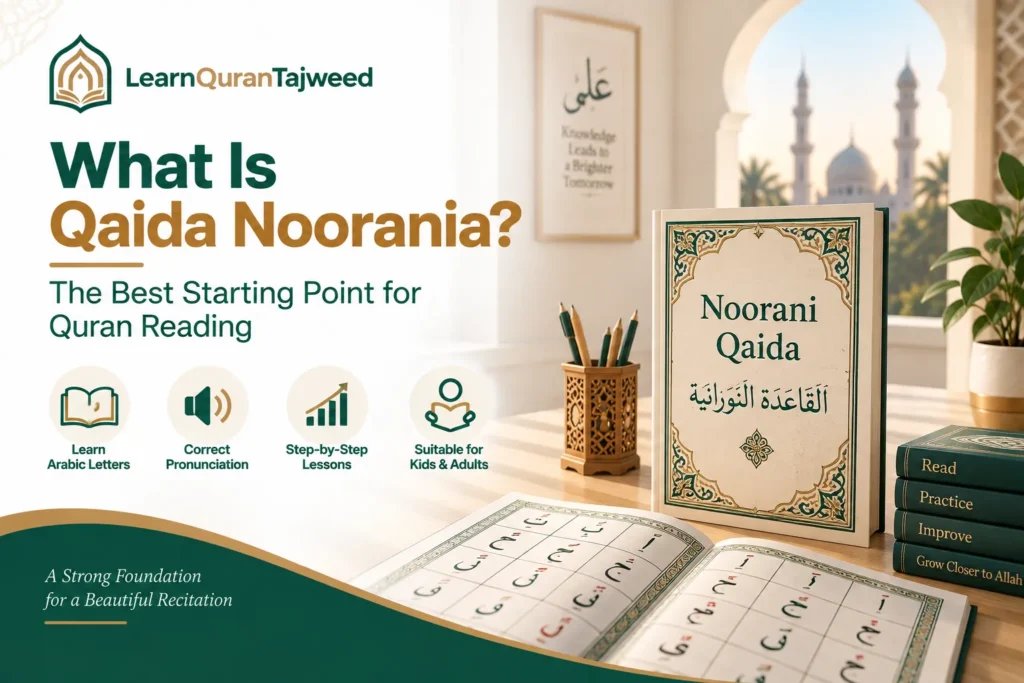
Qaida Noorania is usually the recommended first step if you’re a parent choosing a starting point for your child, or an adult beginner who wants to read the Quran correctly for the first time. It is the most preferred tajweed rule to begin with before memorization or anything else.
Qaida Noorania is the method most Quran teachers reach for when a child or beginner needs to learn to read Arabic before reading the Quran. It teaches the shape, sound, and correct articulation point of every Arabic letter, then builds up to full Quranic words and sentences.
This guide explains what Qaida Noorania actually covers, how its lessons are structured, the right age to start, free resources for learning the qaida, and the mistakes that slow learners down the most.
Who Created Qaida Noorania and Why Is It Used for Quran Reading?
Qaida Noorania is a gradual method for learning to read Arabic letters and words. It is built specifically around Quranic text rather than general Arabic vocabulary. Every word used in its lessons is drawn directly from the Quran, so students practice actual Quranic reading from the very first lesson.
Shaykh Noor Muhammad Haqqani wrote this method. He was a scholar born in 1865 in Punjab, India. He studied hadith under the scholar Ahmad Ali Saharanpuri before writing the qaida that is now named after him.
He died in 1925, but his book is still the standard starting text in Quran schools across the Muslim world.
Noorani Qaida was designed to solve a specific problem. Children and non-Arabic speakers were struggling to connect letter sounds with correct Quranic pronunciation.
He built this method to train the mouth and ear using only Quranic text, rather than teaching Arabic as a general language first. As a result, reading skills and correct tajweed develop together instead of separately.
Read also: How to Recite Quran With Tajweed?
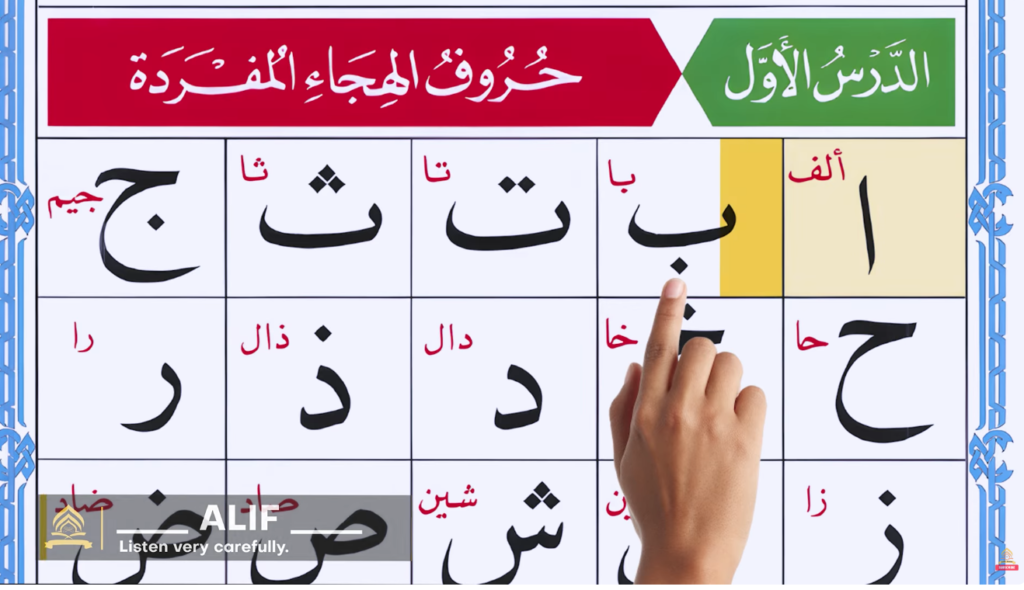
1. Rasool Academy – Free Noorani Qaida Video Lessons
Rasool Academy’s YouTube channel offers learners a free and accessible way to study Noorani Qaida online. Its wide range of lessons is arranged in a clear, progressive order.
It helps beginners move from recognizing Arabic letters and mastering their correct pronunciation to joining letters, reading vowel signs, and developing essential Quran-reading skills.
Learners can watch each lesson from home, pause and repeat difficult sections, and revise at their own pace without paying any fees.
This arranged approach makes the channel especially useful for children. It is also useful for adults and sisters seeking a flexible foundation before beginning Quran recitation and Tajweed studies.
2. Suhuf Ul Quran – Free Noorani Qaida Lessons for Beginners
The Suhuf ul Quran YouTube channel provides a helpful collection of Noorani Qaida lessons for beginners who want to build a strong foundation in Quran reading. Its lessons introduce Arabic letters, their correct sounds, and different letter forms. It also provides vowel marks and basic pronunciation rules in a gradual and accessible way.
Learners can watch the videos for free, repeat challenging sections, and study from home at a pace that suits them.
This makes Suhuf ul Quran a practical online resource for children, adults, and sisters. It is useful for anyone beginning their journey toward accurate Quran recitation and Tajweed.
Read also: The Difference Between Makhraj And Tajweed
3. Qaida Noorania Book with English Instructions
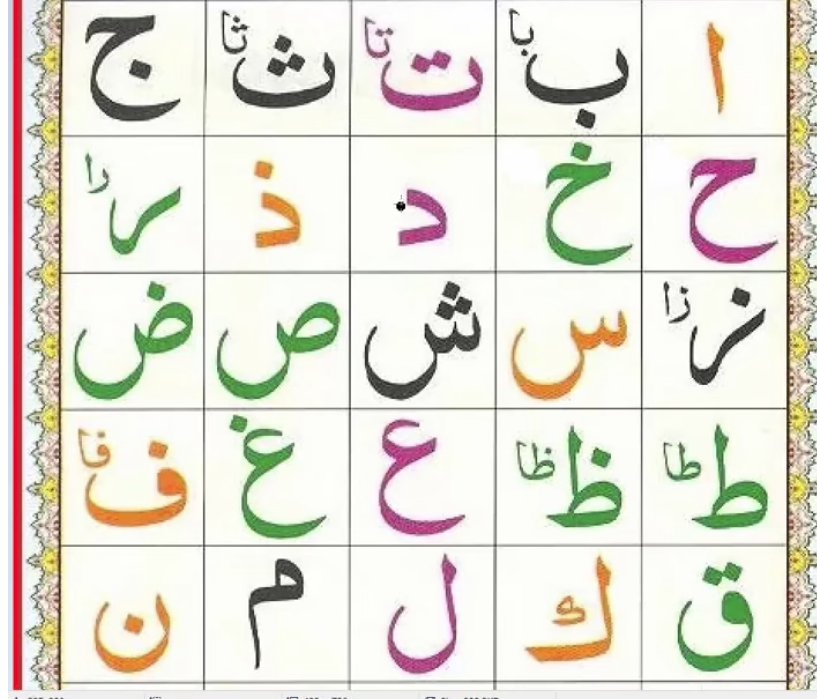
This Noorani Qaida book provides beginner learners with a practical resource for building the foundations of Quran reading. Its lessons introduce Arabic letters in a structured sequence, using clear charts and transliteration. It offers English instructions to explain pronunciation and lesson objectives.
The guidance helps you distinguish similar letters. It can also help you recognize their dots and shapes, and practise reading from right to left before progressing to vowels, in addition to joined letters, words, and Quranic passages.
Because the resource can be downloaded, you can study offline, print the pages, repeat exercises at your own pace, and use them alongside lessons with a Quran teacher.
It is particularly useful for adults, parents teaching children, and non-Arabic speakers who need additional English support while learning Noorani Qaida.
Read also: The Noorani Qaida Tajweed Book
See Our Classrooms in Action
Watch these short clips from our live, interactive Quran courses to see how our students learn and interact with our expert tutors.
Perfect Your Quran Recitation Today
Join expert-led Tajweed classes, and recite the Quran with confidence and clarity.
Start Your Free Trial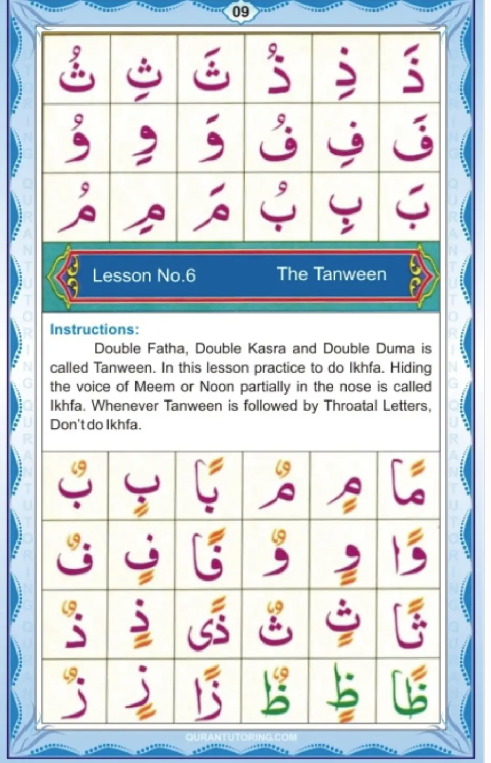
4. Noorani Qaida in English App for Beginners
The Noorani Qaida in English app helps beginners learn the foundations of Quran reading for free through structured lessons, English guidance, and audio pronunciation.
It introduces individual Arabic letters before progressing to joined forms, vowels, Madd letters, Tanween, Sukoon, Shaddah, and practical word-reading exercises.
Learners can listen to each sound, repeat it, and use the colorful examples to distinguish similar letters and recognise common reading patterns. Its step-by-step structure is particularly useful for English-speaking children and adults who have no previous knowledge of Arabic.
The app also allows learners to practise privately at their own pace, making it a convenient supplement to lessons with a qualified Quran teacher.
Read also: Complete Guide To Tajweed Rules
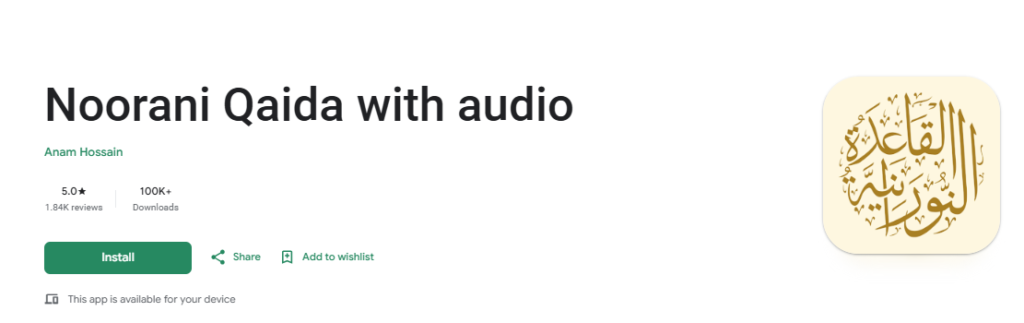
5. Noorani Qaida with Audio for Pronunciation Practice
Noorani Qaida With Audio is a free, ad-free app that helps beginners and children build the foundations of Quran reading and Tajweed through 17 structured lessons. Its clear visual layout introduces Arabic letters before progressing to joined forms, short vowels, and other essential reading patterns.
More than 2,000 audio recordings allow learners to hear correct pronunciation and repeat each example until it becomes familiar. Users can also control playback and change the visual theme for a more comfortable learning experience.
The app provides a convenient way to study Noorani Qaida independently by combining guided lessons with extensive audio practice. It also reinforces lessons received from a qualified Quran teacher.
Read also: Principles of Tajweed
How Is Qaida Noorania Different from Other Quran Reading Qaidas?
Several similar methods exist under different names. For example, Qaida Fathiya, Qaida Baghdadiya, Qaida Noor al-Bayan, Qaida Makkiya, Qaida Rabbaniya, and Qaida al-Furqan.
The key difference between Qaida Noorania and Qaida Baghdadiya is vocabulary. Qaida Baghdadiya includes some words that are not from the Quran at all, while every single word in Qaida Noorania comes from the Uthmani mushaf.
That single design choice is why most Quran academies favor it. The student never practices reading anything they won’t later use.
At Learn Quran Tajweed, our instructors use this exact distinction to plan lessons. The vocabulary is already Quranic. A student who finishes Qaida Noorania can move into reading actual surahs with almost no gap in difficulty.
What Is the Best Age to Start Qaida Noorania?
Most Quran teachers introduce Qaida Noorania from around age four, once a child can recognize shapes and repeat sounds reliably. There’s no strict cutoff on the older end. The same sequence works for teenagers, adults, and non-native Arabic speakers who are starting from scratch.
The real readiness marker isn’t age on its own. It’s whether the learner can sit through a short, focused lesson and repeat a sound back accurately.
A four-year-old who can do that is ready. A ten-year-old who can’t yet sit still for five minutes may need a slower preparation phase first.
Common Qaida Noorania Learning Mistakes to Avoid
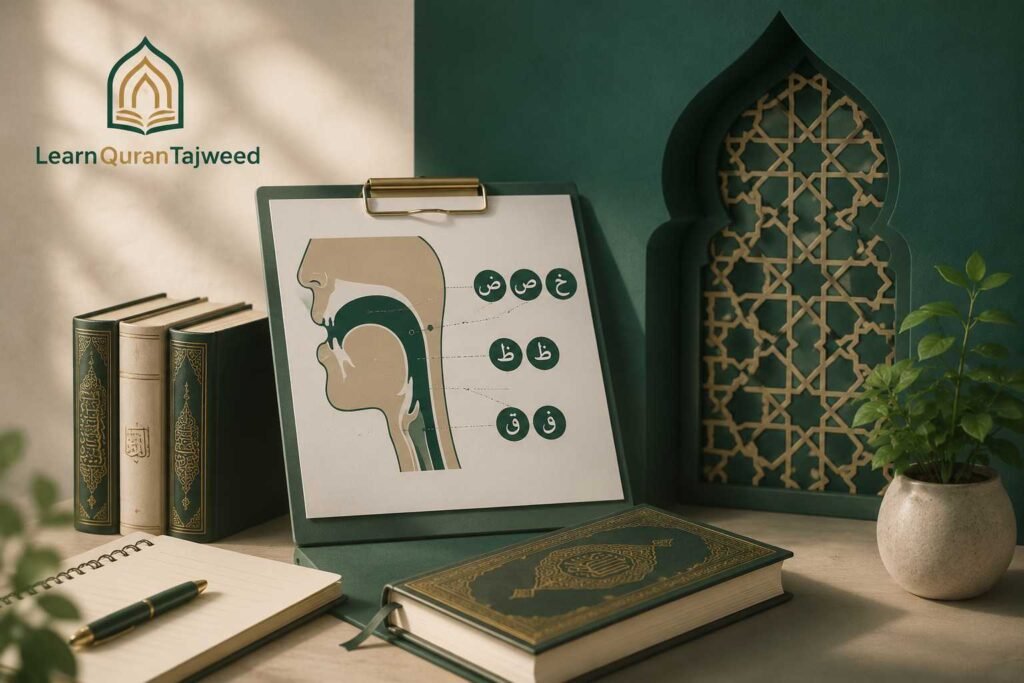
The most recurrent error is rushing past single-letter practice to get to “real reading” faster. A learner who hasn’t drilled the makhraj (articulation point) of a letter on its own will carry that mispronunciation into every word built from it later. As a result, it’s difficult to correct later than to get it right the first time.
There is another common mistake, which is skipping the joined-letter phase. Reading disconnected letters is a different skill from reading letters connected in a word, since the letter shape often changes at the start, middle, or end of a word. Learners who move too quickly often tend to guess at word shapes instead of actually reading them.
Read also: Best Tajweed Books
Inside Learn Quran Tajweed Academy
Curious about how online learning works? Peek inside our actual Quran classes and hear the beautiful recitation of our students and teachers.
Perfect Your Quran Recitation Today
Join expert-led Tajweed classes, and recite the Quran with confidence and clarity.
Start Your Free TrialLearn Qaida Noorania Online with a Certified Quran Tutor
Reading the Quran correctly starts with learning and mastering these foundations accurately at first, not fixing them years later.
Learn Quran Tajweed pairs your child, or you, with a certified tutor who teaches the Qaida Noorania sequence one stage at a time, correcting pronunciation live instead of leaving it to guesswork.
Courses we offer:
- Online Tajweed Classes
- Learn Quran with Tajweed Online
- Beginner Tajweed Course
- Intermediate Tajweed Course
- Advanced Tajweed Course
- Amali (Practical) Tajweed Course
Perfect Your Quran Recitation Today
Join expert-led Tajweed classes, and recite the Quran with confidence and clarity.
Start Your Free TrialConclusion
Qaida Noorania gives a structured, Quran-based path from the Arabic alphabet to actual Quranic reading, built entirely from words already found in the mushaf, so nothing learned along the way is wasted.
Its eight-stage sequence, from single letters through to full Quranic application, works because each stage only asks for one new skill at a time, which is why it remains the standard starting point in Quran schools for children from around age four and for adult beginners alike.
Getting the early stages right, especially letter articulation, matters more than moving quickly through them.
Frequently Asked Questions
What Is Qaida Noorania Used For?
Qaida Noorania is used to teach beginners, usually children from around age four, but also adult non-Arabic speakers, how to read Arabic letters and words correctly before they begin reading the Quran itself. Its lessons use only Quranic vocabulary, so the reading skill transfers directly.
How Long Does It Take To Learn Qaida Noorania?
Most students complete the full sequence in a few weeks to a few months, depending on how often they practice and how thoroughly each stage is mastered before moving forward. Rushing through early stages tends to slow overall progress rather than speed it up.
What Is The Difference Between Qaida Noorania And Qaida Baghdadiya?
The main difference is vocabulary: Qaida Noorania uses only words found in the Quran, while Qaida Baghdadiya includes some non-Quranic words in its practice material. This is why Qaida Noorania is generally seen as a more direct bridge into Quran reading.
At What Age Should A Child Start Qaida Noorania?
Children typically start around age four, once they can recognize shapes and repeat sounds reliably in short sessions. There is no upper age limit; teenagers and adults use the same sequence when learning to read Arabic from scratch.
Can Adults Learn Qaida Noorania, Not Just Children?
Yes. The same eight-stage sequence works for adult beginners and non-native Arabic speakers, since it doesn’t assume any prior knowledge of Arabic. Many adults use it specifically to correct pronunciation habits they never learned properly.
Do I Need A Teacher, Or Can I Learn Qaida Noorania From A Book Alone?
A book or app can teach the sequence, but correcting pronunciation, particularly the articulation point of each letter, is difficult to self-check. A live teacher who can hear and correct mistakes in real time significantly reduces the risk of learning a sound incorrectly and having to unlearn it later.
Related Articles
Tajweed Basics