 Tajweed Rules

Every student who arrives at Learn Quran Tajweed Academy carrying a Tajweed book asks some version of the same question: “Is this the right one for me?” The answer depends entirely on where you are in your recitation development — because no single book teaches perfect Tajweed alone. Books are theoretical frameworks; the actual learning happens in the correction.
That said, certain Tajweed books have genuinely earned their place on the shelf of every serious student. Whether you are working through the rules of Noon sakinah for the first time, or deepening your understanding of Tafkhim and Tarqiq before an Ijazah examination, the right book will organize your thinking, reinforce your lessons, and give you a reliable reference between sessions.
Below is a carefully verified list of the best books of Tajweed — in both English and Arabic — recommended for different levels and purposes.
1. Tajweed Rules of the Qur’an by Kareema Carol Czerepinski
Tajweed Rules of the Qur’an is a three-volume English series published by Dar al-Khair, written specifically as a guide for non-Arabic speakers studying the recitation of Hafs from ‘Aasim by the way of Ash-Shaatibiyyah.
It covers makharij al-huruf, the rules of Noon sakinah, Meem sakinah, all types of Madd, Sifat al-huruf, Tafkhim and Tarqiq, and — in the third volume — the rules of stopping and starting (waqf and ibtida’) in complete detail.
This series has been a classroom standard for over two decades, and there is a reason for that. It explains the Arabic terminology first, then provides the English equivalent — which means students gradually absorb the language of authentic Tajweed scholarship rather than depending on translations alone.
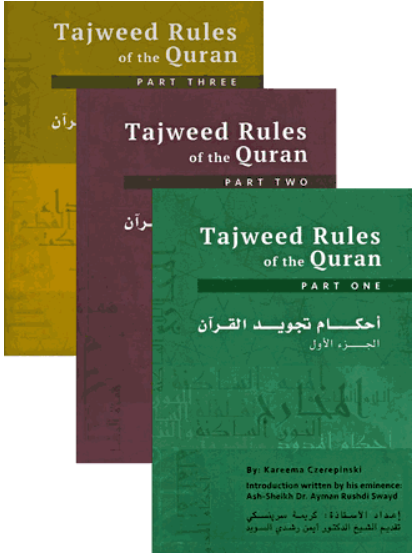
The book is designed for students who already have a basic grasp of Arabic letters and vowels and can read at an elementary level.
One observation I have made repeatedly at Learn Quran Tajweed Academy: students who read Part One before their first lesson arrive with cleaner conceptual understanding of Idhar, Idgham, Ikhfa, and Iqlab — the four cases of Noon sakinah — which allows live sessions to focus on application rather than definition. This is exactly how a Tajweed book should work: preparing the student’s mind so the teacher can prepare their tongue.
This book cannot replace the importance of reciting to and being corrected by a trained teacher of Tajweed; it is a guide and an aid in understanding the concepts, and the application can only be refined by recitation and correction.
Best suited for: Intermediate to advanced English-speaking students seeking systematic theoretical depth.
| Volume | Key Topics Covered |
| Part One | Makharij, Noon sakinah, Meem sakinah, Lam sakinah, Madd |
| Part Two | An-Nabr (accent), Sifat al-huruf, Tafkhim, Tarqiq, Idgham types |
| Part Three | Waqf and Ibtida’, Rasm al-Mushaf, special readings in Hafs |
Our Intermediate Tajweed Course at Learn Quran Tajweed Academy uses this series as a supplementary reference alongside live Ijazah-certified instruction — because the book explains; the teacher corrects.
Join our Intermediate Tajweed Course and get a free trial

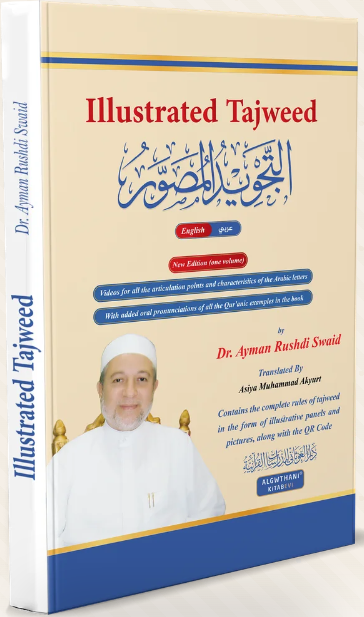
2. Illustrated Tajweed (al-Tajwid al-Musawwar) by Dr. Ayman Rushdi Swaid
Illustrated Tajweed, known in Arabic as al-Tajwid al-Musawwar, is the most visually advanced Tajweed textbook currently available in English. This book compiles four decades of research and teaching in Tajweed science, presenting recitation rules through audio and visual means, including precise scientific diagrams, illustrations of speech organs, and audio examples via QR codes.
The new combined edition — published by Al-Ghuthani House for Quranic Studies — runs 264 pages in a large A4 hardcover format with full-colour illustrations.
The author has included the most correct material and detailed definitions relating to the science of Tajweed, utilizing vivid illustrative pictures of the organs of speech, and using colours to clarify some Tajweed concepts and distinguish them from each other.
What makes this book especially valuable from a teaching standpoint is how it handles makharij. When I work with students on difficult letters — the Dhad, the ‘Ain, the Ha’ — many struggle because they cannot visualize what their articulation organs are actually doing. A diagram showing tongue position relative to the upper molars for Dhad, or the constriction at the middle of the throat for ‘Ain, communicates in seconds what twenty minutes of verbal description cannot.
The book balances traditional Tajweed heritage with modern phonetic science and is approved and reviewed by academic institutions and universities.
3. Taysir al-Tajwid li al-Qur’an al-Majid by Anisa Najam
Taysir al-Tajwid li al-Qur’an al-Majid — commonly called Tajweed of the Glorious Qur’an Made Easy — is a 92-page hardback that has quickly become one of the most recommended English Tajweed books for those at the foundational-to-intermediate stage.
It is a brilliant quality hardback, a must-have for any teacher and student, covering all the basics of Tajweed efficiently with a decent sequence and approach to the content that makes it easy to follow from start to finish.
What genuinely distinguishes this book from comparable introductory texts is its inclusion of Makharij Practice Poems — a rare teaching device that gives students rhythmic oral practice of articulation points, not just written rules. In classroom use, this approach has shown real benefit: students who recite the practice poems daily before their Tajweed sessions develop more consistent muscle memory for difficult makhraj positions.
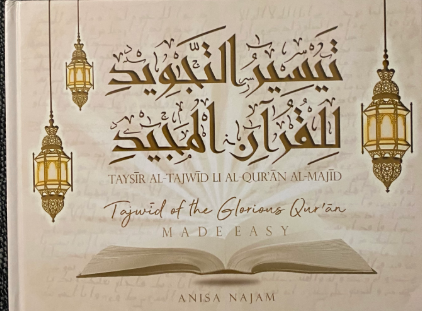
The book incorporates excerpts from authoritative classical texts on Tajweed, and a rare highlight is the inclusion of Makhārij Practice Poems, offering an innovative and effective method for honing articulation skills.
For students at Learn Quran Tajweed Academy beginning their Beginner Tajweed Course, this book works well as a clean, unintimidating entry point — after which they progress to Czerepinski’s series or Dr. Swaid’s work.
Perfect Your Quran Recitation Today
Join expert-led Tajweed classes, and recite the Quran with confidence and clarity.
Start Your Free TrialBegin your Tajweed journey with a free lesson

4. Tuhfat al-Atfal by Imam Sulayman al-Jamzuri
Tuhfat al-Atfal — The Children’s Bequest — is the foundational classical Arabic poem of Tajweed that every serious student must eventually memorize and understand. This is a well-known poem on the science of Tajweed of 61 verses.
Written by Sheikh Sulayman al-Jamzuri, it covers the four rules of Noon sakinah and Tanwin (Idhar, Idgham, Iqlab, and Ikhfa), the three rules of Meem sakinah, the rules of Ghunnah, and the types of Madd — all in memorizable verse form.
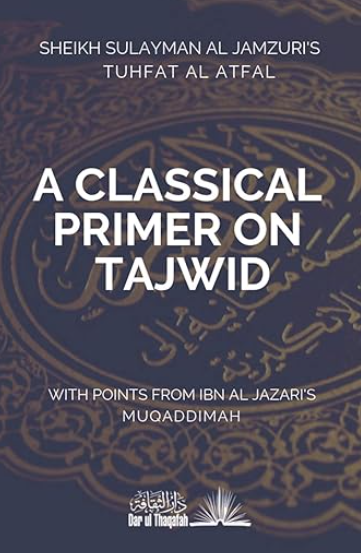
Learning the theoretical rules of Tajweed is a communal obligation (farḍ kifāyah), while practicing it is an individual obligation (farḍ ‘ayn). The Tuhfat al-Atfal was composed precisely to make the former achievable — its verse structure exists to be memorized, making the rules permanently accessible during recitation.
For non-Arabic speakers, an annotated English translation exists. The work is a complete, annotated translation of Sheikh Sulayman al-Jamzuri’s Tuhfat al-Atfal, including the section on makharij al-huruf from Imam Ibn al-Jazari’s intermediate-level poem.
At Learn Quran Tajweed Academy, memorization of the Tuhfat al-Atfal is integrated into our Tajweed Ijazah Program — because Ijazah-holding scholars expect students to know this poem by heart before receiving certification.
Read Also: How to Recite Quran With Tajweed?
Shots Videos from Our Courses
Perfect Your Quran Recitation Today
Join expert-led Tajweed classes, and recite the Quran with confidence and clarity.
Start Your Free TrialJoin our Tajweed Ijazah Program and get a free trial

Read Also: How to Improve Tajweed?
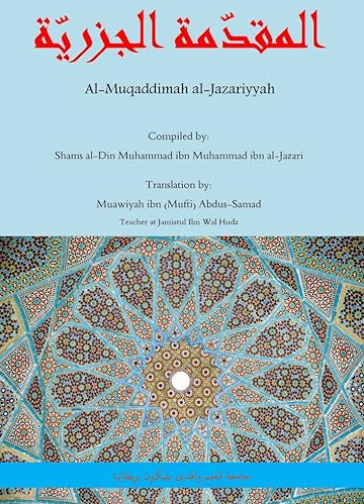
5. Al-Muqaddimah al-Jazariyyah by Imam Ibn al-Jazari
Al-Muqaddimah al-Jazariyyah is the most authoritative classical text on Tajweed in existence — a poem of over 100 verses composed by Imam Muhammad ibn Muhammad ibn al-Jazari (751–833 AH), who is recognized as the foremost scholar of the Quranic sciences.
The poem outlines the rules on how to correctly pronounce the letters and words of the Quran, being considerate of the places of stopping and starting as well as the way it is written.
Al-Muqaddimah al-Jazariyyah is a compilation of Tajweed rules in over 100 poems in Arabic, and the Jamiatul Ilm wal Huda publication includes the original text with an English translation and explanation, allowing readers to easily understand the Arabic lines.
This is not a beginner’s book — it is the summit. Every major Tajweed curriculum in the world references it. For students working through the Advanced Tajweed Course at Learn Quran Tajweed Academy, studying the Jazariyyah line by line with an Ijazah-certified instructor represents the transition from applied knowledge to scholarly mastery.
The edge cases that only Ijazah candidates encounter — the precise rules for al-Isti’la letters under specific vowelling conditions, or the interaction between Madd Lazim and the Huruf Muqatta’at — find their original articulation in this poem. No other source resolves them with the same authority.
Read Also: The Noorani Qaida Tajweed Book
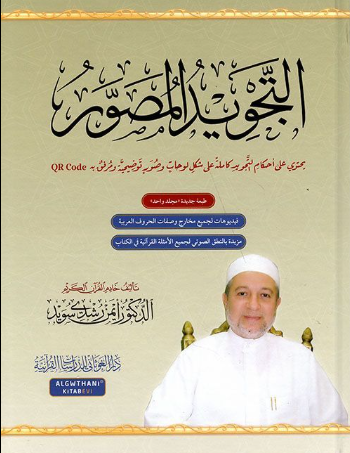
6. Al-Tajweed al-Musawwar (Arabic Original) by Dr. Ayman Rushdi Swaid
The Arabic original edition of al-Tajwid al-Musawwar deserves separate mention from its English translation, as it functions differently. Arabic-proficient students gain access to the full terminological precision of the text — every rule is stated using authentic ‘Ilm al-Tajweed terminology as it appears in classical scholarship, without the interpretive layer that any translation introduces.
Dr. Swaid presents recitation rules with precise scientific diagrams, illustrations of speech organs, and is approved and reviewed by academic institutions and universities. The Arabic edition is widely used in institutes across the Arab world and has become a standard reference at Quranic schools from Damascus to Cairo.
For students who have Arabic language fluency and want a single authoritative reference integrating classical scholarship with modern phonetic illustration, this Arabic edition is the strongest available option.
Read Also: Tajweed Made Easy Book
Our Students Reviews
Perfect Your Quran Recitation Today
Join expert-led Tajweed classes, and recite the Quran with confidence and clarity.
Start Your Free TrialStarting Your Tajweed Mastery with Certified Instruction at Learn Quran Tajweed Academy
Books explain. Teachers transform. Learn Quran Tajweed Academy offers both.
- Ijazah-certified instructors specializing in Hafs ‘an ‘Asim
- Personalized 1-on-1 sessions tailored to your current recitation level
- Flexible scheduling available 24/7 for global students
- Structured progression from beginner rules to full Ijazah certification
- Exclusive Tajweed focus — not a generalist Quran platform
Claim your FREE trial lesson today and let a certified Qari assess your recitation personally.
Check out the best tajweed course for your needs:
- Practical Tajweed Course
- Beginner Tajweed Course
- Intermediate Tajweed Course
- Advanced Tajweed Course
- Quran Tarteel Course
- Tajweed Ijazah Program
- Tajweed Course for Sisters
- Tajweed course for Kids
Book your free trial Tajweed lesson today

Conclusion
The best Tajweed books are tools — and like all tools, their value depends entirely on how they are used. A student who reads Czerepinski before class arrives better prepared. A student who memorizes the Tuhfat al-Atfal internalizes the rules in a way that survives the pressure of live recitation. And a student who works through the Jazariyyah line by line with a qualified instructor crosses from learning Tajweed into becoming a scholar of it.
Alhamdulillah, the resources available to English-speaking students today are richer than at any previous point in history. The obligation now is to use them wisely — with a teacher, with consistency, and with the understanding that every hour spent perfecting recitation is an act of worship in itself. Choose your book, find your teacher, and begin.
Read Also: The Jazariyyah Tajweed Poem
Frequently Asked Questions About Tajweed Books
Are Tajweed books sufficient for learning Tajweed without a teacher?
Tajweed books are essential theoretical references, but they cannot replace live instruction. The application of rules — correct tongue placement, ghunnah duration, qalqalah strength — can only be accurately developed through recitation to a qualified teacher who hears and corrects errors in real time.
Which Tajweed book is best for a complete beginner in English?
Anisa Najam’s Taysir al-Tajwid li al-Qur’an al-Majid is the most accessible English starting point, covering core rules clearly across 92 pages. Students who prefer a more detailed reference from the beginning can use Kareema Czerepinski’s Part One alongside live instruction at a beginner level.
Do I need to learn Arabic to use Tajweed books effectively?
Not initially. The best English Tajweed books introduce Arabic terminology alongside English explanations, building your familiarity gradually. However, students pursuing Ijazah certification will eventually need to study the classical Arabic poems — Tuhfat al-Atfal and al-Jazariyyah — directly in Arabic.
What Tajweed books do Ijazah students need to study?
Ijazah candidates typically need to memorize and understand Tuhfat al-Atfal by Imam al-Jamzuri and al-Muqaddimah al-Jazariyyah by Imam Ibn al-Jazari. These two classical poems are the foundation of Tajweed scholarship in the Hafs ‘an ‘Asim transmission and are expected knowledge at any serious Ijazah examination.
Is the Illustrated Tajweed book suitable for self-study?
Illustrated Tajweed by Dr. Ayman Rushdi Swaid is excellent for understanding theory and visualizing makharij, but experienced instructors note it works best alongside live guidance. The QR audio codes embedded in the new edition help bridge this gap for motivated self-learners, though correction from a certified teacher remains necessary for accurate pronunciation development.