 Tajweed Rules

| Key Takeaways |
| Tajweed rules teach children to recite the Quran with correct pronunciation, preventing meaning-altering errors from an early age. |
| Kids learn Tajweed best through four foundational rules: Noon Sakinah, Meem Sakinah, Madd (elongation), and Qalqalah (echo sound). |
| Children as young as five can begin Tajweed, starting with letter recognition and progressing to rule application within months. |
| Color-coded Qurans, songs, and movement-based activities make Tajweed rules genuinely memorable and engaging for young learners. |
| Online Tajweed classes for kids pair certified instructors with flexible scheduling, making consistent progress achievable for busy families. |
Every child who loves the Quran deserves to recite it correctly — and Tajweed rules with examples for kids make that possible, even before they fully understand Arabic.
Tajweed is not reserved for advanced students or adults; it is the precise set of pronunciation rules that protects each letter’s sound and ensures the Quran reaches the listener exactly as it was revealed.
When children learn Tajweed early, they build recitation habits that last a lifetime. The main rules — including Noon Sakinah outcomes, Meem rules, Madd elongation, and Qalqalah — can all be introduced through age-appropriate examples, visuals, and repetition, making correct Quran recitation both accessible and genuinely enjoyable for young learners.
What Is Tajweed for Kids?
Tajweed is the science of reciting the Quran with accurate pronunciation, correct letter articulation, and proper sound qualities. Tajweed for kids means learning how to say each letter and when to stretch, merge, or bounce sounds — protecting the meaning of Allah’s words from unintentional errors.
Children’s brains absorb pronunciation patterns with remarkable speed. In my experience teaching young students at Learn Quran Tajweed Academy, children who begin Tajweed between ages five and eight internalize correct articulation far more naturally than adults who start later.
Early exposure removes the need to “unlearn” bad habits that solidify with age. The Prophet ﷺ’s companions were known to recite the Quran with measured care — and that tradition of precision begins best in childhood.
Why is Mispronunciation in Quran Recitation a Serious Concern?
A single letter error in Quran recitation can shift meaning entirely. The Arabic letters ق (Qaf) and ك (Kaf) sound similar to untrained ears, yet confusing them changes words. Teaching children Tajweed is, at its core, an act of protecting the Quran’s integrity — and the reward for that begins with parents who prioritize correct learning.
The Main Tajweed Rules for Kids
The main Tajweed rules for kids include four foundational categories: Noon Sakinah and Tanween rules, Meem Sakinah rules, Madd (elongation), and Qalqalah (echo). Each rule has a clear trigger, a clear action, and simple Quranic examples a child can practice immediately.
These four categories cover the vast majority of what a child encounters in their daily recitation — from Surah Al-Fatiha to the short Surahs of Juz ‘Amma. Introduce one rule at a time, always with a concrete example, and children progress steadily without overwhelm.
Our Tajweed Course for Kids at Learn Quran Tajweed Academy structures exactly this progression, introducing each rule in digestible stages with certified Ijazah-certified instructors.
Enroll your kid in our Tajweed classes for kids with a FREE trial

1. Noon Sakinah and Tanween Have Four Outcomes in Tajweed
The rules of Noon Sakinah and Tanween are among the first rules children encounter. When a Noon without a vowel (نْ) or a double vowel (Tanween) appears, the reciter must apply one of four rules depending on the letter that follows.
| Rule | Trigger Letters | Child-Friendly Description | Example |
| Izhaar (clear sound) | ء ه ع ح غ خ | Say the Noon clearly | مِنْ عِلْمٍ — “min ‘ilm” |
| Idgham (merge) | ي ر م ل و ن | Merge the Noon into the next letter | مِنْ نَّعِمة — “min-ne’ma” |
| Iqlab (flip to Meem) | ب only | Change Noon to a nasal Meem sound | أَنْبِئْهُمْ — “am-bi’hum” |
| Ikhfa (conceal) | Remaining 15 letters | Hide the Noon with a nasal hum | مَنْ كَانَ — “man kaana” |
For a detailed breakdown, visit our dedicated guides on Izhaar,Idgham,Iqlab, and Ikhfa.
2. Meem Sakinah Rules Are Easier for Kids to Grasp
The Meem Sakinah rules apply when a Meem without a vowel (مْ) appears. There are three outcomes, and children find these easier than Noon rules because only one trigger letter requires special attention.
- Ikhfa Shafawi — Meem followed by ب: conceal the Meem with lips lightly closed and a nasal hum
- Idgham Shafawi — Meem followed by another Meem: merge both Meems into one prolonged Meem
- Izhaar Shafawi — Meem followed by any other letter: pronounce the Meem clearly
A simple example children enjoy practicing: تَرْمِيهِم بِحِجَارَةٍ (tarmihim bihijarah) from Surah Al-Fil (105:4) — the مْ before ب demonstrates Ikhfa Shafawi perfectly.
تَرْمِيهِم بِحِجَارَةٍ
Tarmihim bihijarah
“Striking them with stones of hard clay.” (Al-Fil 105:4)
Demonstrates Ikhfa Shafawi: مْ followed by ب
3. Madd (Elongation) Teaches Children to Stretch Sounds Correctly
Madd rules govern how long a vowel sound is held. For children, the most important starting point is Madd Asli (natural elongation) — the baseline two-count stretch applied to the three Madd letters: ا, و, ي when preceded by their matching vowel.
Children grasp Madd quickly when taught through clapping. One clap per count — two claps for Madd Asli — turns an abstract rule into a physical, memorable action.
The opening of Surah Al-Fatiha contains excellent Madd Asli examples: الرَّحْمَٰنِ الرَّحِيمِ (Ar-Rahmanir-Raheem), where the ا in Rahman and the ي in Raheem each receive a natural two-count hold.
4. Qalqalah Is the “Bouncing” Sound Kids Love
Qalqalah is a subtle echo or bounce produced when certain letters appear with a sukoon (no vowel) or at the end of a word. The five Qalqalah letters are memorized easily through the phrase قُطْبُ جَدٍّ (Qutbu Jadd): ق، ط، ب، ج، د.
Children consistently find Qalqalah the most enjoyable rule to learn. When teaching it, I ask students to say “dub” and feel the natural bounce of the ب — that echo quality is Qalqalah. Surah Al-Ikhlas provides an immediately accessible example:
قُلْ هُوَ ٱللَّهُ أَحَدٌ
Qul huwa Allahu ahad
“Say: He is Allah, [Who is] One.” (Al-Ikhlas 112:1)
The ق in Qul demonstrates Qalqalah Kubra — a strong bounce at word-end.
Shots Videos from Our Courses
Perfect Your Quran Recitation Today
Join expert-led Tajweed classes, and recite the Quran with confidence and clarity.
Start Your Free TrialWhat Is the Importance of Learning Tajweed for Kids?
Learning Tajweed in childhood establishes three lasting gifts: correct pronunciation habits, a deeper connection with the Quran’s meaning, and eligibility for significant reward.
The Prophet Muhammad ﷺ said, as recorded in Sahih al-Bukhari:
“The one who is proficient in the recitation of the Quran will be with the honorable and obedient scribes (angels) and he who recites the Quran and finds it difficult to recite, doing his best to recite it in the best way possible, will have a double reward.”(Bukhari 4937)
Children who learn Tajweed early carry its benefits into adulthood. They recite Salah with confidence, avoid meaning-altering errors, and develop a reverence for the Quran that shapes their Islamic identity.
Beyond spirituality, Tajweed develops phonemic awareness, listening precision, and disciplined practice habits — skills that benefit children academically as well.
How Tajweed Protects the Quran’s Meaning from Childhood
Arabic is a language where a single vowel change can transform a word completely. Teaching children Tajweed is not perfectionism — it is protection.
A child who learns that ضَ and ظَ are articulated from different points in the mouth is a child who will never accidentally alter a divine word.
How to Teach Tajweed for Kids Using Simple Techniques?
Teaching Tajweed to kids requires age-appropriate methods: short sessions, repetition, visual aids, and movement. Abstract rule memorization fails with young learners — concrete experience succeeds.
The most effective approach I have observed at Learn Quran Tajweed Academy pairs each rule with a physical anchor.
For Ghunnah (nasal resonance), children hum with two fingers on their nose to feel the vibration.
For Qalqalah, they tap the desk on the bounce. For Madd, they stretch their arms. These kinesthetic cues make rules retrievable during actual recitation, not just during drills.
Age-by-Age Tajweed Teaching Progression for Kids
| Age Range | Focus Area | Teaching Method |
| 4–6 years | Letter recognition, Makharij basics | Songs, repetition, picture flashcards |
| 6–8 years | Madd Asli, Qalqalah | Clapping counts, color-coded Quran |
| 8–10 years | Noon Sakinah rules, Meem rules | Rule charts, Surah practice, audio modeling |
| 10–13 years | Full Tajweed rule application | 1-on-1 instruction, recorded recitation review |
Read Also: The Noorani Qaida Tajweed Book
Using Color-Coded Qurans to Reinforce Tajweed Rules Visually
Color-coded Tajweed Qurans (like the Tajweed Quran published by Dar Al-Ma’rifah) use different colors to mark different rules — red for Ghunnah letters, blue for Qalqalah, green for Madd.
For children who are visual learners, these Qurans transform abstract rules into immediately visible patterns. Parents can point to a color and ask “what does the green color tell us?” — turning recitation practice into an interactive game.
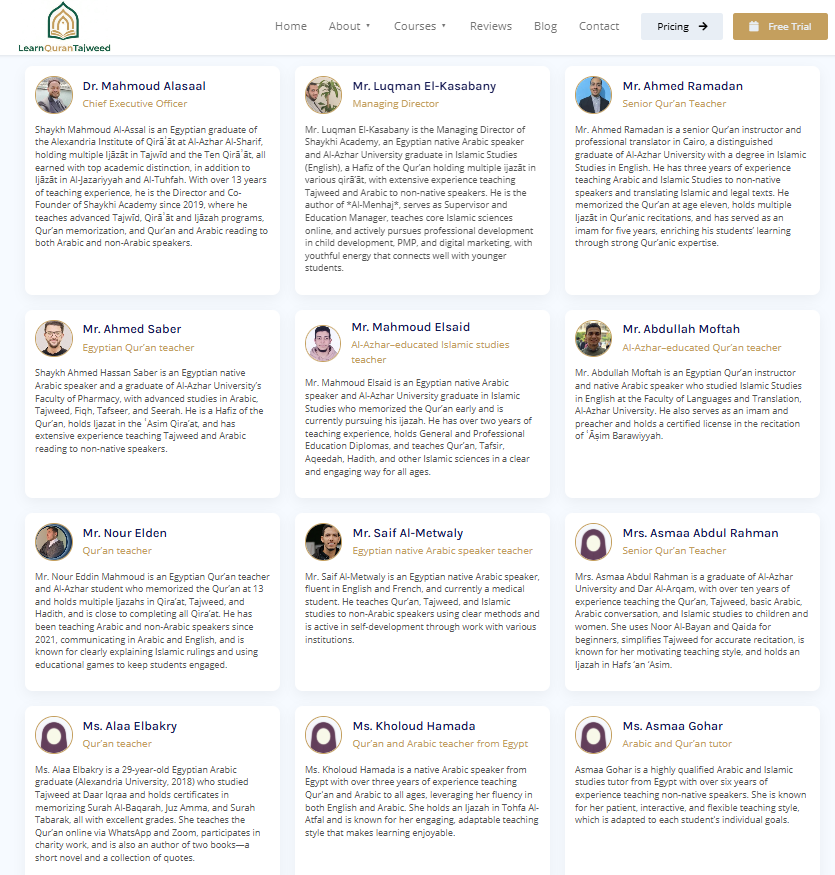
Meet One of our Certified Teachers to Correct Your Kid’s Pronunciation
Read Also: Best Tajweed Book for Kids
What Are the Tajweed Classes for Kids?
Tajweed classes for kids are structured online or in-person lessons taught by certified instructors, specifically designed around a child’s attention span, learning pace, and recitation level.
At Learn Quran Tajweed Academy, our Tajweed Course for Kids covers Makharij (articulation points), Sifat (letter characteristics), all Noon and Meem Sakinah rules, Madd types, and Qalqalah — delivered through 1-on-1 sessions by Ijazah-certified instructors specializing in teaching young non-Arabic speakers.
Sessions are typically 30 minutes for younger children and 45 minutes for older students, ensuring focus is maintained without fatigue. Progress is tracked rule by rule, and parents receive regular updates on their child’s recitation development.
Read Also: Fun Tajweed Activities for Kids
Do Kids Only Learn Tajweed in Tajweed Classes?
No — Tajweed classes teach the rules, but consistent application happens at home during daily recitation.
A good Tajweed class gives children the tools and corrections they need; parents reinforce those habits by listening to their child’s recitation during family Quran time.
The most rapid progress I have seen in young students comes from families who dedicate even ten minutes daily to reviewing what was learned in class. The classroom plants the seed; the home grows it.
Our Students Reviews
Perfect Your Quran Recitation Today
Join expert-led Tajweed classes, and recite the Quran with confidence and clarity.
Start Your Free TrialRead Also: Tajweed Practice Worksheets
Starting Your Child’s Tajweed Learning at Learn Quran Tajweed Academy
Correct Tajweed habits formed in childhood stay for life — and every child deserves a certified teacher to guide that formation.
Learn Quran Tajweed Academy offers:
- Ijazah-certified instructors specializing in Hafs ‘an ‘Asim for children
- Personalized 1-on-1 sessions adapted to each child’s age and recitation level
- Flexible scheduling available 24/7 across all global time zones
- Structured rule-by-rule progression with parent progress reports
- A FREE Trial Lesson — no commitment required
👉 Book Your Child’s Free Trial Lesson Today
Check out the best tajweed course for your needs:
- Practical Tajweed Course
- Beginner Tajweed Course
- Intermediate Tajweed Course
- Advanced Tajweed Course
- Quran Tarteel Course
- Tajweed Ijazah Program
- Tajweed Course for Sisters
- Tajweed course for Kids
Book a free trial Tajweed lesson today

Conclusion
Tajweed is not an advanced subject reserved for scholars — it is the birthright of every child who recites the Quran. When children learn the four foundational rules through age-appropriate methods, correct pronunciation becomes natural, not forced.
The earlier a child begins, the more effortlessly these rules settle into their recitation. With patient instruction, consistent home practice, and a certified teacher, every young learner can recite the Quran with the precision and care it deserves — Insha’Allah.
Read Also: Tajweed Worksheets for Kids
Frequently Asked Questions About Tajweed Rules for Kids
How Many Tajweed Rules Are There?
Classical Tajweed scholarship identifies numerous rules, but they are organized under main categories: Noon Sakinah and Tanween rules (four outcomes), Meem Sakinah rules (three outcomes), Madd types (six primary types), and Qalqalah. For children, focusing on these four foundational categories covers the vast majority of recitation situations they will encounter.
How Long Does It Take to Learn Tajweed for Kids?
Most children aged six to ten begin applying basic Tajweed rules — Qalqalah, Madd Asli, and Izhaar — within two to three months of consistent weekly lessons. Full mastery of all Noon and Meem Sakinah rules typically develops over six to twelve months. Progress depends heavily on lesson frequency, home practice, and the quality of instruction.
Can Kids Learn Quran Online with Tajweed Effectively?
Yes — online Tajweed instruction for kids is highly effective when delivered in 1-on-1 sessions with a certified instructor. The one-on-one format allows the teacher to correct each child’s specific errors in real time, which group classes cannot replicate. Learn Quran Tajweed Academy specializes in exactly this model, with tools like screen sharing and audio monitoring ensuring accurate pronunciation feedback.
What Is the Best Age to Start Tajweed for Kids?
Children can begin Tajweed basics — correct letter articulation and simple Madd — as early as age five, once they recognize Arabic letters. Ages six to eight represent the most receptive window, when pronunciation habits form quickly and children engage enthusiastically with structured learning. Starting later is always better than not starting — there is no age that is “too late.”