 Tajweed Rules

Mastering the rules of noon sakinah and tanween is one of the most transformative milestones in a reciter’s Tajweed development. These rules govern how the noon sakinah and tanween are pronounced depending on the letters that follow them—and getting them wrong affects nearly every page of the Quran.
Understanding the definition of noon sakinah and tanween, along with their four governing rules, gives you the structural framework to recite with accuracy, beauty, and confidence. This covers everything from izhar and idgham to iqlab and ikhfa—with precise application rooted in classical Tajweed scholarship.
What Is Saakin in Tajweed?
Before applying noon sakinah rules, you need a clear grasp of what “saakin” means in the science of Tajweed. A saakin letter in Tajweed is one that carries a sukoon (ـْ)—meaning it has no vowel of its own and produces no independent sound movement.
When the noon letter carries a sukoon, it becomes a noon sakinah (نْ). Its pronunciation is then entirely determined by the letter that follows it in recitation. This dependency is what makes noon sakinah one of the most rule-heavy letters in the entire Quran.
Understanding saakin in Tajweed is foundational because it explains why noon sakinah behaves differently than a voweled noon. The absence of a vowel creates a phonetic “waiting state” that the following letter resolves.
Perfect Your Quran Recitation Today
Join expert-led Tajweed classes, and recite the Quran with confidence and clarity.
Start Your Free TrialWhat Is the Definition of Noon Sakinah?
Noon sakinah is the noon letter (ن) that carries a sukoon and has no following vowel sound of its own. It appears in three positions across Quranic text.
Noon sakinah appears in these positions:
- Middle of a word: e.g., مِنْهُمْ (minhum)
- End of a word (when followed by the next word in connected recitation): e.g., مَنْ آمَنَ
- End of a word with pause: Here, the noon sakinah is pronounced clearly regardless of the following letter
Crucially, noon sakinah remains in the word regardless of whether you continue reading or pause. This distinguishes it from tanween, as you will see next.
Read also: Meem Rules in Tajweed
What Is the Definition of Tanween?
Tanween is a temporary, additional noon sakinah sound added to the end of nouns, adjectives, and some other word types—represented by doubled vowel markings (ً ٍ ٌ). Tanween is not written as an actual noon letter; it exists only in pronunciation.
This distinction is critical. Noon sakinah is a real letter embedded in the word. Tanween is a phonetic addition that disappears entirely when you pause at the end of a word.
When you stop on a word ending in tanween, you pronounce only the vowel—the noon sound vanishes.
Both, however, follow the same four noon sakinah rules when recitation continues into the next word. This shared rule system is why they are always studied together.
Rules of Noon Sakinah and Tanween
Tajweed scholars categorized the rules of noon sakinah and tanween into four rules based on the following letter. Each rule produces a distinctly different phonetic outcome.
| Rule | Arabic Term | Following Letters | Key Characteristic |
| 1 | Izhar Halqi | أ ه ع ح غ خ | Clear pronunciation, no ghunnah |
| 2 | Idgham | ي ر م ل و ن | Merging into the following letter |
| 3 | Iqlab | ب | Conversion to meem with ghunnah |
| 4 | Ikhfa Haqiqi | 15 remaining letters | Concealment with ghunnah |
At Learn Quran Tajweed Academy, our Beginner Tajweed Course covers all four noon sakinah rules systematically through personalized 1-on-1 sessions with certified Qaris, ensuring correct articulation from day one.
Begin your Tajweed journey with a free lesson

1. Izhar Halqi Is the Clearest of All Noon Sakinah Rules
Izhar means “clear pronunciation.” Halqi refers to the throat (halq)—the articulation region of the six izhar letters: أ، هـ، ع، ح، غ، خ.
When noon sakinah or tanween is followed by any of these six letters, the noon sound must be pronounced fully and clearly with absolutely no ghunnah (nasal resonance).
The word “halqi” itself is the key diagnostic. All six letters emerge from different points within the throat region—from the deepest point (hamzah and haa) to the middle throat (ayn and haa) to the upper throat (ghayn and kha).
Because noon’s articulation point (tip of the tongue) and the throat are anatomically separate, no merger or modification occurs.
A very common mistake among non-Arabic speakers is adding a slight nasal tone before throat letters. This subtle error changes izhar into something resembling ikhfa—and must be actively corrected.
Quranic Examples of Izhar Halqi:
The noon sakinah in مَنْ آمَنَ (man amana) before the hamzah (أ) is a clear example.
Another example is in Surah Az-Zalzalah:
مَن يَعْمَلْ مِثْقَالَ ذَرَّةٍ خَيْرًا يَرَهُ
Maya’mal mithqala dharratin khayran yarah
“Whoever does an atom’s weight of good will see it.” (Az-Zalzalah 99:7)
Tanween on ذَرَّةٍ before خ — Izhar Halqi applies
2. Noon Ghunna Rules and the Two Categories of Idgham
Idgham means “merging.” When noon sakinah or tanween is followed by one of six letters (ي، ر، م، ل، و، ن), the noon sound merges into the following letter. Scholars collect these six letters into the mnemonic يَرْمَلُوْنَ (yarmaloon).
Idgham divides into two types, and understanding the ghunnah distinction between them is essential—this is precisely where noon ghunna rules come in.
A. Idgham with Ghunnah Involves Four Letters
When the following letter is ي، ن، م، و, the merger occurs with a two-count ghunnah (nasal resonance held for the duration of two harakaat). The noon or tanween is absorbed into the next letter while the nasal sound resonates through the nose.
وَمَنْ يَعْمَلْ مِنَ الصَّالِحَاتِ
Wa maya’mal minas-salihat
“And whoever does righteous deeds.” (An-Nisa 4:124)
Noon sakinah + ي — Idgham with Ghunnah
B. Idgham without Ghunnah Applies Only to Lam and Ra
When the following letter is ل or ر, the noon merges completely with no ghunnah whatsoever. This is a full, clean assimilation—the noon disappears entirely and the following letter is pronounced with a slight strengthening.
مِنْ رَّبِّهِمْ
Min rabbihim
“From their Lord.” (Al-Baqarah 2:5)
Noon sakinah + ر — Idgham without Ghunnah
Idgham only applies when the noon sakinah is in one word and the following letter begins a separate word. If both are within a single word (like دُنْيَا or قِنْوَانٌ), izhar applies instead—this exception catches many intermediate students off guard.
Shots Videos from Our Courses
Perfect Your Quran Recitation Today
Join expert-led Tajweed classes, and recite the Quran with confidence and clarity.
Start Your Free Trial3. Iqlab Transforms Noon Sakinah into a Nasal Meem Before Ba
Iqlab means “transformation” or “conversion.” It applies exclusively when noon sakinah or tanween is followed by the letter ب.
In this case, the noon sound converts into a meem (م) pronounced with a two-count ghunnah, while the lips come together without fully closing in a standard meem articulation.
This is phonetically logical: pronouncing a noon (tongue-tip letter) immediately before ba (bilabial letter) is physically awkward. The conversion to a nasal meem—also a bilabial letter—creates smooth phonetic transition.
| Stage | What Happens |
| Before iqlab | Noon sakinah or tanween present |
| During iqlab | Noon converts to nasal meem-like sound |
| Ghunnah applied | Two harakaat of nasal resonance |
| Following ba | Ba pronounced after ghunnah completes |
In Quranic script, a small م is sometimes written above the noon or tanween before ba as a reading aid—though the actual letter remains noon in the written text.
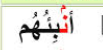
أَنْبِئْهُمْ
Ambi’hum
“Inform them.” (Al-Baqarah 2:33)
The نْ before ب applies iqlab. Noon sakinah + ب — Iqlab applies
4. Ikhfa Haqiqi Governs the Largest Group of Noon Sakinah Rules Examples
Ikhfa means “concealment.” Ikhfa haqiqi—true concealment—applies when noon sakinah or tanween is followed by any of 15 specific letters.
These letters are often memorized through the famous Arabic poem opening: صِفْ ذَا ثَنَا كَمْ جَادَ شَخْصٌ قَدْ سَمَا (the 15 letters being: ص، ذ، ث، ك، ج، ش، ق، س، د، ط، ز، ف، ت، ض، ظ).
In ikhfa, the noon is neither fully pronounced (as in izhar) nor fully merged (as in idgham). Instead, it is held in a nasal “in-between” state—the tongue hovers near but does not touch its articulation point, while ghunnah resonates for two harakaat.
The articulation of ikhfa changes subtly depending on the letter that follows. This is an expert-level insight many students miss: ikhfa before ك (a back-of-tongue letter) differs in tongue positioning from ikhfa before ت (a tongue-tip letter). The nasal resonance remains constant, but the tongue prepares for the upcoming letter.
مُنذِرٌ
Mundhir
“A warner.” (Al-Ra’d 13:7)
Tanween + ذ — Ikhfa Haqiqi applies
Learn Quran Tajweed Academy’s Intermediate Tajweed Course offers systematic progression for students who have completed the basics but still struggle with these subtle application errors, ensuring mastery before advancing to more complex rule interactions.
Join our Intermediate Tajweed Course and get a free trial

Read also: Meem Sakinah Rules
Noon Saakin and Tanween Rules Examples
Seeing the noon sakinah rules applied in actual Quranic text is what bridges theory and real recitation. The examples below cover all four rules—each drawn directly from the Quran—so you can hear and internalize exactly how each rule sounds in context.
A. Izhar Halqi Example from Surah Al-Baqarah
The throat letters trigger izhar wherever they follow noon sakinah or tanween in the Quran. One of the clearest examples appears in the following verse:
مَنْ عَمِلَ صَالِحًا
Man ‘amila sālihā
“Whoever does righteous deeds.” (An-Nahl 16:97)
The noon in مَنْ must be crisp and complete before the ayn. Any nasal bleed into the ayn is a recitation error that changes the rule entirely.
B. Idgham with Ghunnah Example Demonstrating Noon Saakin Merger
Idgham with ghunnah is among the most frequently occurring noon saakin and tanween rules examples in the Quran. The noon or tanween dissolves into the following letter while two counts of nasal resonance ring through.
مِن وَلِيٍّ وَلَا نَصِيرٍ
Min waliyyiw-wa lā nasīr
“No protector and no helper.” (Al-Baqarah 2:107)
Notice that مِنْ and وَلِيٍّ are two separate words—confirming idgham applies here and not izhar.
C. Idgham without Ghunnah Example Before Lam and Ra
When noon sakinah precedes lam or ra, the merger is total and silent—no trace of nasal resonance remains. This clean assimilation is one of the most misapplied noon saakin and tanween rules examples among students who habitually add ghunnah out of habit.
مِن لَّدُنْهُ
Mil-ladunhu
“From Himself.” (Al-Kahf 18:2)
The recited form مِل confirms the noon has completely disappeared—replaced by a slightly reinforced lam.
D. Iqlab Example Showing Tanween Conversion Before Ba
Iqlab examples in the Quran are easy to identify once you know to look for noon sakinah or tanween immediately before a ba. The following verse demonstrates tanween undergoing iqlab:
سَمِيعٌ بَصِيرٌ
Samī’um-Basīr
“All-Hearing, All-Seeing.”
The small م sometimes marked above the tanween in Tajweed-annotated Quran editions is a scribal aid pointing to this exact conversion.
E. Ikhfa Haqiqi Example Covering Multiple Concealment Letters
Ikhfa examples are the most abundant of all noon saakin and tanween rules examples in the Quran, given that 15 letters trigger this rule. The following verse demonstrates ikhfa before the letter ك:
وَإِن كُنتُمْ
Wa in kuntum
“And if you were.” (Al-Baqarah 2:23)
Noon sakinah + ك — Ikhfa Haqiqi: noon concealed, tongue backs toward ka’s articulation point, ghunnah held 2 counts
| Rule | Quranic Example | Following Letter | Ghunnah |
| Izhar Halqi | مَنْ عَمِلَ | ع | None |
| Idgham with Ghunnah | مِن وَلِيٍّ | و | 2 counts |
| Idgham without Ghunnah | مِن لَّدُنْهُ | ل | None |
| Iqlab | سَمِيعٌ بَصِيرٌ | ب | 2 counts |
| Ikhfa Haqiqi | وَإِن كُنتُمْ | ك | 2 counts |
Drilling these specific noon saakin and tanween rules examples in your daily recitation—rather than studying rules in isolation—is what accelerates real Tajweed improvement.
At Learn Quran Tajweed Academy, our Tarteel Course uses verse-based drilling exactly like this to anchor rule recognition in authentic Quranic context from the earliest lessons.
Join our Quran Tarteel Course and get a free trial

Common Recitation Errors in Noon Sakinah Rules Application
Understanding the rules intellectually is very different from applying them correctly under recitation pressure. Below are the most frequent errors seen in students who have studied noon sakinah rules but still make mistakes.
| Error Type | Mistake | Correction |
| Izhar with throat letters | Adding slight nasal tone before أ، هـ | Pronounce noon fully, then immediately transition |
| Idgham in one word | Merging noon in دُنْيَا | Apply izhar—both letters are in one word |
| Weak ikhfa | Pronouncing noon too clearly before 15 letters | Conceal noon, hold ghunnah for full 2 counts |
| Iqlab ghunnah omission | Converting to meem but skipping ghunnah | Hold nasal resonance fully before proceeding to ba |
| Idgham ghunnah on lam/ra | Adding ghunnah when merging into ل or ر | Complete merger with zero ghunnah |
A Summary Comparison of All Rules of Noon Sakinah and Tanween
To consolidate your understanding, here is a final reference table organizing all rules of noon sakinah and tanween with their essential properties side by side.
| Rule | Letters | Ghunnah | Noon Sound | Pronunciation Result |
| Izhar Halqi | أ هـ ع ح غ خ | None | Clear | Full noon pronounced |
| Idgham with Ghunnah | ي ن م و | 2 counts | Merged | Noon absorbed with nasal |
| Idgham without Ghunnah | ل ر | None | Fully merged | Noon disappears completely |
| Iqlab | ب | 2 counts | Converted | Becomes nasal meem sound |
| Ikhfa Haqiqi | 15 letters | 2 counts | Concealed | Between clear and merged |
The Prophet ﷺ said: “مَنْ قَرَأَ حَرْفًا مِنْ كِتَابِ اللَّهِ فَلَهُ بِهِ حَسَنَةٌ” — “Whoever reads a letter from the Book of Allah will have a reward for it.” (Tirmidhi 2910). Perfecting these rules is not merely academic—it is an act of worship with profound reward.
Our Students Reviews
Perfect Your Quran Recitation Today
Join expert-led Tajweed classes, and recite the Quran with confidence and clarity.
Start Your Free Trial
Begin Applying Noon Sakinah Rules Accurately with Learn Quran Tajweed Academy
Mastering noon sakinah rules transforms your recitation from hesitant reading into confident, beautiful Tajweed. The difference is systematic, expert-guided practice.
Why students choose Learn Quran Tajweed Academy:
- Ijazah-certified instructors specializing in Hafs ‘an ‘Asim recitation
- Structured courses from Beginner Tajweed Course through Advanced Tajweed Course
- Tajweed Ijazah Program for certification-focused students
- Quran Tarteel Course for beautification and measured recitation development
- 1-on-1 personalized sessions with flexible 24/7 scheduling
- Specialized curriculum for non-Arabic speakers
Book your free trial lesson today and experience the difference expert Tajweed instruction makes from your very first session.
Check out the best tajweed course for your needs:
- Practical Tajweed Course
- Beginner Tajweed Course
- Intermediate Tajweed Course
- Advanced Tajweed Course
- Quran Tarteel Course
- Tajweed Ijazah Program
- Tajweed Course for Sisters
- Tajweed course for Kids
Book your free trial Tajweed lesson today to assess your current application of Tajweed rules and receive a customized learning path toward recitation mastery.

Conclusion
Noon sakinah and tanween follow four rules—izhar, idgham, iqlab, and ikhfa—each triggered by specific following letters. Recognizing which rule applies in real recitation requires both theoretical knowledge and trained ear-tongue coordination developed through consistent practice.
Tanween shares all four rules with noon sakinah during connected recitation, yet disappears completely upon pausing—a distinction that directly affects recitation accuracy across hundreds of Quranic verses. Understanding the definition of tanween alongside noon sakinah prevents the most common structural errors students make.
Alhamdulillah, these rules are learnable with the right methodology and qualified instruction. With committed study and proper guidance, applying noon sakinah rules fluently across the entire Quran is an achievable, deeply rewarding goal—insha’Allah.