 Tajweed Basics

Reciting the Qur’an with beauty is a quiet aspiration shared by many hearts, yet the path often feels uncertain when learning happens at home. Without guidance, even sincere effort can drift into hesitation, mispronunciation, and rules applied more by guesswork than confidence.
A structured home approach makes mastery possible. By building fluent Arabic reading, refining articulation points, understanding letter attributes, and applying core Tajweed rules through daily practice and expert correction, learners can transform ordinary recitation into accurate, measured, and spiritually resonant Qur’anic reading.
Step 1 to Learn Quran with Tajweed at Home Is Establishing Your Arabic Reading Foundation
Before applying Tajweed rules, you must read Arabic fluently without hesitation. This means recognizing all 28 Arabic letters instantly across their isolated, initial, medial, and final forms.
Your reading speed should allow smooth connection between letters. Pausing frequently to decode letters prevents proper Tajweed application since rules depend on letter flow and word boundaries.
Test yourself by reading any Quranic page within five minutes. If you struggle with letter recognition or vowel marks, address these gaps first before advancing to Tajweed study.
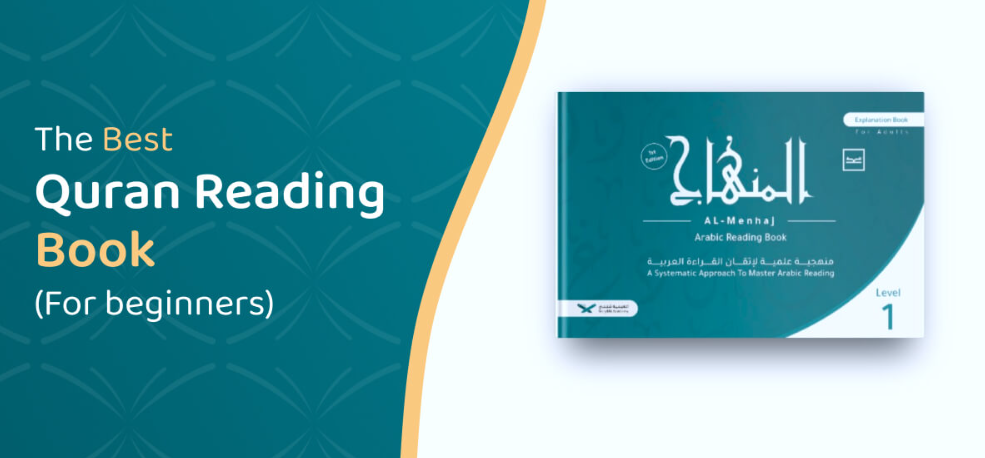
For students needing foundational Arabic reading development, Learn Quran Tajweed Academy offers Al-Menhaj Book (Learn to Read Quran)—a comprehensive beginner’s resource covering Arabic alphabet and basic reading mechanics prepared by expert instructors.
Explore Al-Menhaj Book (Learn to Read Quran)
Step 2 for Learning Quran with Tajweed at Home Requires Mastering Makharij Accurately
Makharij (articulation points) form the cornerstone of correct Tajweed application. Each Arabic letter originates from a specific point in your vocal apparatus, and precision here determines recitation accuracy.
Begin with the five primary articulation zones: Al-Jawf (empty space in mouth and throat), Al-Halq (throat), Al-Lisan (tongue), Ash-Shafatan (lips), and Al-Khayshum (nasal cavity).
1. Throat Letters Require Precise Depth Differentiation
The six throat letters emerge from three distinct depths. ء and ه originate from the deepest throat area (Aqsa Al-Halq). ع and ح come from the middle throat region (Wasat Al-Halq).
غ and خ emerge from the upper throat area nearest the mouth (Adna Al-Halq). Practice each pair separately, feeling the exact origination point before combining them.
2. Tongue Letters Demand Positional Precision
Tongue letters constitute the majority of Arabic phonemes and require exceptional spatial awareness. The letter ق originates from the deepest tongue region pressing against the soft palate.
The letter ك articulates slightly forward from ق. These subtle distinctions separate accurate recitation from approximation that changes meaning.
Learn Quran Tajweed Academy’s Beginner Tajweed Course with certified Qaris helps students master makharij through personalized 1-on-1 sessions focused on correct articulation and real-time feedback on letter production.
Begin your Tajweed journey with a free lesson

Step 3 Studying Sifat Systematically
Sifat (letter attributes) distinguish letters sharing the same articulation point. Without mastering sifat, your ت sounds like ط, and your د resembles ض.
The 17 sifat divide into two categories: Sifat Lazimah (permanent attributes) and Sifat Aridah (conditional attributes). Focus initially on the five paired opposing attributes that affect every letter.
1. Hams and Jahr Differentiate Breathiness
Hams (whispering) applies to ten letters where airflow accompanies sound without vocal cord vibration. The remaining 19 letters possess Jahr (vocalization) with full vocal cord engagement.
Practice the Hams letters: ف، ح، ث، ه، ش، خ، ص، س، ك، ت. Notice airflow continues without voice. Compare with their Jahr counterparts to feel the vibration difference.
2. Shiddah and Rakhawah Control Sound Flow
Shiddah (strength) completely stops sound at the articulation point for eight letters: أجد قط بكت. Rakhawah (softness) allows sound to flow freely through 16 letters.
Between these extremes, five letters possess Bainiyyah (moderation): لن عمر. These permit partial sound flow while maintaining some restriction at their articulation points.
Step 4 Mastering Nun Sakinah and Tanween Rules
Nun Sakinah (unvoweled ن) and Tanween (double vowels creating -an, -in, -un sounds) follow four mandatory rules based on the following letter.
1. Idgham Requires Letter Merging
When Nun Sakinah or Tanween precedes the six Idgham letters (ي، ر، م، ل، و، ن), merge them together. The first four letters (ي، ر، م، ل) take Idgham without Ghunnah (no nasal prolongation).
مِنْ رَبِّهِمْ
Min rabbihim
“From their Lord” (Al-Baqarah 2:5)
The ن in مِنْ merges completely into ر without nasal sound.
The remaining two letters (و، ن) require Idgham with Ghunnah, maintaining nasal resonance for two counts.
2. Ikhfa Demands Concealment With Nasalization
Fifteen letters trigger Ikhfa (concealment): ص، ذ، ث، ك، ج، ش، ق، س، د، ط، ز، ف، ت، ض، ظ. Conceal the Nun sound partially while maintaining Ghunnah for two counts.
Position your articulation organs for the following letter while releasing nasal sound. This creates a hybrid sound between clear pronunciation and complete merging.
Working with Ijazah-certified instructors at Learn Quran Tajweed Academy through our Intermediate Tajweed Course provides the individualized attention needed to perfect Ikhfa application across all fifteen letters with proper Ghunnah duration.
Join our Intermediate Tajweed Course and get a free trial

Step 5 Understanding Meem Sakinah Rules
Meem Sakinah (unvoweled م) follows three distinct rules simpler than Nun Sakinah but equally critical for accurate recitation.
1. Idgham Shafawi Merges Identical Letters
When Meem Sakinah precedes another م, merge them with Ghunnah for two counts. This Idgham Shafawi (labial merging) maintains nasal resonance throughout.
2. Ikhfa Shafawi Conceals Before Ba
When Meem Sakinah precedes ب, apply Ikhfa Shafawi (labial concealment). Close lips as for م while maintaining Ghunnah for two counts, then transition to ب.
تَرْمِيهِم بِحِجَارَةٍ
Tarmeehim bihijaarah
“Striking them with stones” (Al-Fil 105:4)
The م in تَرْمِيهِم requires Ikhfa Shafawi before ب in بِحِجَارَةٍ.
3. Idhar Shafawi Clarifies Before Remaining Letters
For all 26 remaining letters after Meem Sakinah, apply Idhar Shafawi (clear labial pronunciation) without Ghunnah or concealment. Pronounce م distinctly before transitioning to the next letter.
Perfect Your Quran Recitation Today
Join expert-led Tajweed classes, and recite the Quran with confidence and clarity.
Start Your Free TrialStep 6 for Learning Quran with Tajweed at Home Is Applying Madd Rules Correctly
Madd (prolongation) extends vowel sounds based on specific conditions. Incorrect Madd duration destroys rhythm and can alter meaning in critical contexts.
Natural Madd (Madd Tabi’i) extends vowel letters (ا، و، ي) for two counts when no Hamzah or Sukun follows. This represents the baseline prolongation standard.
Read Also: Tajweed Symbols and Stop Signs
1. Madd Munfasil Extends Across Word Boundaries
When a Madd letter concludes one word and Hamzah begins the next, apply Madd Munfasil (separated prolongation) for 4-5 counts in Hafs recitation.
قَالُوا آمَنَّا
Qaaloo aamannaa
“They said, ‘We have believed'” (Al-Baqarah 2:14)
The و in قَالُوا extends 4-5 counts before the Hamzah in آمَنَّا.
Read Also: Is Tajweed Obligatory In Salah?
2. Madd Lazim Demands Obligatory Extension
When a Madd letter precedes a Shaddah or original Sukun within one word, apply Madd Lazim (necessary prolongation) for exactly six counts without variation.
Learn Quran Tajweed Academy’s Advanced Tajweed Course offers systematic progression for students mastering complex Madd interactions, ensuring precision in duration measurement before advancing to beautification techniques.
Reserve your free trial lesson for Advanced Tajweed Course

Read Also: Do I have to learn Tajweed?
Step 7 Mastering Qalqalah Properly
Qalqalah (echo) creates a bouncing sound when pronouncing the five Qalqalah letters (ق، ط، ب، ج، د) with Sukun. This attribute prevents these letters from sounding weak or swallowed.
When Qalqalah letters carry Sukun within a word, produce a subtle echo without exaggeration. The sound bounces naturally from the articulation point.
يَخْلُقُ
Yakhluqu
“He creates”
The خ carries Sukun, but since it’s not a Qalqalah letter, no echo occurs. However, if ق appeared with Sukun, subtle Qalqalah would apply.
When stopping on a Qalqalah letter, whether originally Sukun or gaining Sukun through stopping, produce stronger Qalqalah. The echo becomes more pronounced and distinct.
This distinction between minor and major Qalqalah intensity separates mechanical rule application from refined recitation that reflects deep Tajweed understanding.
Read Also: How Long Does It Take to Learn Tajweed?
Perfect Your Quran Recitation Today
Join expert-led Tajweed classes, and recite the Quran with confidence and clarity.
Start Your Free TrialRead Also: How to Learn Tajweed?
Step 8 Daily Consistent Practice
Knowledge without application remains theoretical. Schedule dedicated daily practice sessions focusing on specific Tajweed rules rather than attempting comprehensive review.
Allocate 20-30 minutes minimum for focused recitation with rule application. Begin with short Surahs where you can concentrate fully on accuracy without overwhelming yourself.
1. Record Your Recitation for Self-Assessment
Use smartphone recording to capture your recitation. Listen objectively, identifying specific Tajweed errors: incorrect Madd duration, missed Ghunnah, unclear Makharij, or improper Qalqalah.
Compare your recording with expert reciters like Sheikh Mahmoud Khalil Al-Hussary or Sheikh Abdul Basit. Notice subtle differences in articulation points, Sifat application, and Madd measurements.
Read Also: Is Tajweed Obligatory?
2. Seek Expert Correction Regularly
Self-study develops awareness, but certified instructors identify errors your untrained ear misses. Many students reinforce incorrect pronunciation through unsupervised practice, creating habits requiring extensive correction.
Learn Quran Tajweed Academy’s Tajweed Ijazah Program provides structured, rigorous training under qualified Ijazah-holding scholars for students committed to certification-level mastery with authentic recitation chains.
Join our Tajweed Ijazah Program and get a free trial
Read Also: Tajweed – Meaning, Types, History, and More
Master Quran Recitation with Learn Quran Tajweed Academy
Learning Quran with Tajweed at home requires systematic progression through Makharij, Sifat, and core Tajweed rules with consistent daily practice and expert guidance.
Learn Quran Tajweed Academy specializes exclusively in Tajweed mastery for non-Arabic speakers through:
- Ijazah-certified Qaris with authentic sanad providing real-time recitation correction
- Personalized 1-on-1 instruction targeting your specific articulation challenges
- Structured courses from Beginner Tajweed Course through Advanced Tajweed Course to Tajweed Ijazah Program
- Flexible 24/7 scheduling accommodating students worldwide
- Proven methodology transforming basic readers into precise, beautiful reciters
Book your free trial lesson today to assess your current level and receive a customized learning path toward Tajweed excellence, Insha’Allah.
Check out the best tajweed course for your needs:
- Practical Tajweed Course
- Beginner Tajweed Course
- Intermediate Tajweed Course
- Advanced Tajweed Course
- Quran Tarteel Course
- Tajweed Ijazah Program
- Tajweed Course for Sisters
- Tajweed course for Kids
Book your free trial Tajweed lesson today to assess your current application of Tajweed rules and receive a customized learning path toward recitation mastery.

Conclusion
Learning Qur’an with Tajweed at home succeeds when progression is intentional. Strong Arabic reading skills support accurate Makharij, while systematic study of Sifat, Madd, and nasalization rules ensures each letter is given its full right without distortion or imbalance.
Daily, focused practice turns rules into instinct. Short sessions, recorded self-review, and comparison with precise reciters sharpen awareness, preventing small errors from becoming ingrained habits that later require difficult correction.
True refinement comes through qualified supervision. Certified instructors provide targeted feedback, correct subtle mistakes, and guide learners toward disciplined consistency, allowing home-based students to achieve clarity, balance, and confidence in their Qur’anic recitation.
Related Articles
Tajweed Basics



Leave a Reply