 Tajweed Rules
Reading the Quran with Tajweed is crucial as it preserves the text’s authenticity and enhances the spiritual experience. The Prophet Muhammad (PBUH) recited the Quran with Tajweed, setting a standard for Muslims. Tajweed ensures correct pronunciation, maintaining the integrity of the Quran.
While reading without Tajweed still offers spiritual benefits, it may lead to mispronunciations that can alter meanings. Basic Tajweed rules are obligatory to avoid major errors, but mastering advanced rules is a communal responsibility.
Reading without Tajweed is not considered sinful, but proper Tajweed is highly recommended to respect the sacred text. Learning Tajweed can be pursued through structured courses and practice under a qualified teacher, though self-study resources are also available.
Tajweed, the science of Quranic recitation, is not merely about articulating words correctly; it is an essential practice that preserves the sacred text’s authenticity and enhances the spiritual experience of its readers.
The Prophet Muhammad (PBUH) himself recited the Quran with Tajweed, setting a precedent for all Muslims. By understanding and implementing Tajweed, Muslims around the world can ensure they are honoring the divine words with the respect and precision they deserve.
Is Tajweed Obligatory?
Many scholars argue that is tajweed obligatory because the Quran was revealed with its own set of unique phonetic laws. Ignoring these laws intentionally is seen as a lack of respect for the precision of the divine revelation we hold.
Reading the Quran without Tajweed:
Reading the Quran without Tajweed refers to reciting the Quranic text without adhering to the rules that govern proper pronunciation and articulation. Tajweed is crucial for maintaining the precise phonetic and linguistic integrity of the Quran as it was revealed to the Prophet Muhammad (peace be upon him).
Without Tajweed, there is a higher risk of mispronunciations that could alter the meanings of words and sentences, potentially leading to misunderstandings. While reading the Quran without Tajweed still brings spiritual benefits, it lacks the accuracy and respect that come with proper recitation.
The truth is: reading the Quran without Tajweed is not wrong or sinful, as long as you are not intentionally mispronouncing the words or changing their meaning. There’s a big difference between:
- A beginner who doesn’t know Tajweed yet, and reads with basic effort and respect.
- A person who knows the correct rules but intentionally ignores them out of carelessness or arrogance.
Scholars emphasize that the Quran was revealed with specific rules of pronunciation that preserve its linguistic integrity and spiritual power. At Learn Quran Tajweed Academy, our Beginner Tajweed Course with Ijazah-certified instructors helps students build a solid foundation by focusing on correct letter recognition.
Begin your Tajweed journey with a free lesson

Is Reading the Quran without Tajweed Wrong or Haram?
Reading the Quran without Tajweed is not considered wrong or haram, but it is not ideal. Without Tajweed, there is a risk of making errors that can change the meaning of the words.
While the effort and intention to read the Quran are commendable and rewarded, observing Tajweed is important for accurate recitation. It ensures that the text is pronounced as it was revealed.
This is one of the most common questions among Muslims who are learning to recite the Quran, especially non-Arabic speakers. The short answer is: Tajweed is highly recommended, but not strictly required for everyone. Let’s explain.
Islamic scholars have carefully discussed this issue, and their conclusions are clear and balanced:
- For the Muslim community (Ummah) as a whole, learning and teaching Tajweed is a communal obligation (fard kifayah). That means, as long as some qualified Muslims preserve it, the rest are not sinful for not mastering it.
- For individual Muslims, including beginners and non-Arabic speakers, Tajweed is recommended (mustahabb), not mandatory.
You are not sinful for reading the Quran without Tajweed , as long as you’re doing your best, respecting the Quran, and not intentionally changing its meaning. Scholars emphasize that effort and sincerity matter more than perfect pronunciation.
Perfect Your Quran Recitation Today
Join expert-led Tajweed classes, and recite the Quran with confidence and clarity.
Start Your Free TrialExample of how reading Quran with Tajweed rules is essential for preserving the divine meaning
Mispronouncing certain letters in the Quran isn’t always a small issue, it can lead to serious changes in meaning.
For example, confusing the word “mastūra” (مَسْتُورًا) with “maṣṭūra” (مَسْطُورًا), or “maḥẓūra” (مَحْظُورًا) with “maḥdhūra” (مَحْذُورًا), might seem minor to the untrained ear. But in the Quran, these words appear in different contexts with very different meanings.That’s why learning Tajweed isn’t only about perfection, it’s about preserving the Quran’s message as it was revealed, one sound at a time.
The Prophet Muhammad ﷺ said:
“The one who recites the Quran fluently is with the noble angels, and the one who struggles while reciting and finds it difficult will have double the reward.” (Sahih al-Bukhari and Muslim)
This hadith is incredibly comforting. It tells us that struggling is not failure, it’s worship.
So if you’re trying your best, your reward is guaranteed, even if your pronunciation isn’t perfect yet.
Therefore, while it is not sinful to read the Quran without Tajweed, it is highly recommended to learn and apply these rules to maintain the integrity and respect of the sacred text.
Reading the Quran without Tajweed is not haram (forbidden). While it is highly recommended to recite the Quran with Tajweed to preserve the correct pronunciation and meaning, it is not sinful to read without it, especially for those who are still learning or are not proficient in Tajweed.
Is It Compulsory To Recite Quran With Tajweed?
Some people mistakenly believe that is it compulsory to recite quran with tajweed only for those who are leading the prayers. In reality, every individual is responsible for the accuracy of their own recitation during their personal daily prayers and devotions.
Others think that if they don’t speak Arabic, they are exempt from the rules of articulation and rhythmic nasal sounds. However, Tajweed was specifically preserved so that even non-Arabs could replicate the exact sounds of the Prophet, peace be upon him.
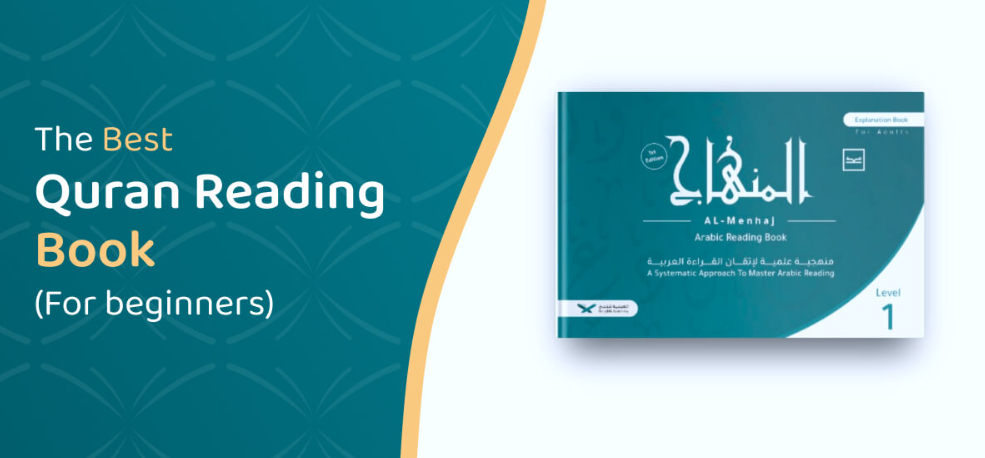
For students who still need to establish fundamental Arabic reading skills, Learn Quran Tajweed Academy offers Al-Menhaj Book (Learn to Read Quran). This comprehensive resource helps you master the alphabet before you begin your deep study of the more complex Tajweed rules.
Explore Al-Menhaj Book (Learn to Read Quran)
How to Read the Quran with Tajweed?
By following these steps, you can effectively read the Quran with Tajweed, ensuring accurate pronunciation and a beautiful recitation.
1- Proper Intentions:
Before beginning your recitation, make the intention to read for the sake of Allah and to seek His pleasure.
2- Understand Tajweed Rules:
Familiarize yourself with the basic rules of Tajweed, such as Ikhfa (concealing), Idgham (merging), and Qalqalah (echoing). Understanding these rules is essential for proper pronunciation and articulation of the Quranic text.
3- Focus on Pronunciation:
Pay close attention to the correct pronunciation of each letter and word. Tajweed ensures that each letter is pronounced from its correct articulation point, which preserves the meaning of the words.
Sifat refers to the internal characteristics of letters, such as whether they are heavy, soft, or contain a whistling sound. Learning these attributes through our Intermediate Tajweed Course at Learn Quran Tajweed Academy ensures that your letters sound distinct and clear.
Join our Intermediate Tajweed Course and get a free trial

4- Practice Rhythm and Intonation:
Tajweed includes rules for the proper rhythm and intonation of the recitation. Practice reciting with the appropriate pace and melody, which enhances the beauty and clarity of the Quran.
5- Use a Mushaf with Tajweed Color Codes:
Use a Quran (Mushaf) that highlights Tajweed rules with different colors. This visual aid helps in remembering and applying the rules while reading.
6- Listen to Qualified Reciters:
Regularly listen to recordings of skilled reciters who follow Tajweed rules meticulously. Mimicking their recitation can help improve your own.
7- Recite Regularly:
Consistent practice is crucial. Dedicate time daily to recite the Quran with Tajweed, focusing on applying the rules correctly.
Working with Ijazah-certified instructors at Learn Quran Tajweed Academy through our Advanced Tajweed Course provides the individualized attention needed to master these rulings.
Reserve your free trial lesson for Advanced Tajweed Course

Read Also: Tajweed Symbols and Stop Signs
8- Review and Reflect:
After recitation, reflect on the meanings of the verses. Understanding the message of the Quran enhances your connection to the text and motivates you to improve your recitation.
9- Learn the Basics:
Begin by learning the Arabic alphabet and the correct pronunciation of each letter. Understanding how each letter sounds in different positions within a word is crucial.
Read Also: Is Tajweed Obligatory In Salah?
Did the Prophet read the Quran with Tajweed?
Yes, the Prophet Muhammad (PBUH) recited the Quran with Tajweed. He was divinely guided in his recitation, ensuring that the pronunciation and intonation were perfect. The practice of Tajweed as we know it was derived from his recitation.
The Prophet’s method of recitation served as the foundation for the rules of Tajweed, which were later systematized by scholars to preserve the exact pronunciation and delivery of the Quranic text as it was revealed.
Read Also: Do I have to learn Tajweed?
Do you have to memorize the Quran with Tajweed?
While it is not obligatory to memorize the Quran with Tajweed, it is highly recommended. Memorizing the Quran with Tajweed ensures that one learns the correct pronunciation and articulation of the verses, preserving the integrity and meaning of the text.
Proper Tajweed prevents errors in pronunciation that could potentially alter the meaning of the words. Therefore, for those aiming to memorize the Quran, incorporating Tajweed is strongly advised to maintain accuracy and respect for the sacred text.
The Quranic command to “recite the Quran with measured recitation” implies that we must follow the rules of Tarteel. Learn Quran Tajweed Academy‘s Quran Tarteel Course specializes in developing proper pacing and breath control that reflects the beauty of the text.
Join our Quran Tarteel Course and get a free trial

Read Also: How Long Does It Take to Learn Tajweed?
Should I Try to Learn Tajweed?
You don’t need to master Tajweed overnight, but you should absolutely try to learn it if you can. And not out of fear, pressure, or guilt. You should learn Tajweed because:
- It preserves the original recitation of the Quran, as it was passed down from the Prophet ﷺ through generations.
- It protects the meaning of the words. In Arabic, changing a single sound can completely change the meaning of a word.
- It deepens your connection with the Quran. Tajweed helps you recite the Quran the way it was revealed, beautifully and meaningfully.
- It increases your khushu’ (focus) in prayer. Reciting with Tajweed slows you down and helps you reflect on each verse.
- It’s part of honoring the Quran. Allah says: “Those to whom We gave the Book recite it with its true recital…” (Surah AL-Baqarah 121)
- It brings spiritual peace and personal confidence. The more you improve, the more joyful and fulfilling your recitation becomes.
- It’s easier than you think, with the right help. Learning Tajweed step-by-step with a qualified teacher makes the journey smoother and more enjoyable than trying to do it alone.
Read Also: How to Learn Quran with Tajweed at Home?
Once, the Companion Ibn Mas’ud رضي الله عنه heard a man recite the verse “Innamā aṣ-ṣadaqātu lil-fuqarāʾ” [Indeed, charity is for the poor] (Surah At-Tawbah 60) but without elongating the word “al-fuqarāʾ” (الفقراء).
Ibn Mas’ud objected, saying:
“This is not how the Prophet ﷺ taught me. He recited it with elongation.”
This shows how much care the Companions gave to Tajweed, not as a formality, but as a trust in preserving the Quran.
So start where you are. Keep learning. Keep reciting. Because every sound you utter in sincerity brings you closer to the light of the Quran, and the mercy of its Author.
Read Also: How to Learn Tajweed?
Perfect Your Quran Recitation Today
Join expert-led Tajweed classes, and recite the Quran with confidence and clarity.
Start Your Free TrialRead Also: Tajweed – Meaning, Types, History, and More
Master Quran Tajweed with Learn Quran Tajweed Academy
Perfect your recitation and ensure your worship is accurate by learning from the best specialists in the field today. Our academy focuses exclusively on Tajweed excellence to help you recite the Quran with confidence, precision, and a beautiful tone.
- Learn from Ijazah-certified instructors with authentic chains of transmission.
- Get personalized 1-on-1 feedback in every single session.
- Enjoy flexible 24/7 scheduling that fits your busy Western lifestyle.
- Follow a structured system from our Beginner Tajweed Course to the Tajweed Ijazah Program.
Check out the best tajweed course for your needs:
- Practical Tajweed Course
- Beginner Tajweed Course
- Intermediate Tajweed Course
- Advanced Tajweed Course
- Quran Tarteel Course
- Tajweed Ijazah Program
- Tajweed Course for Sisters
- Tajweed course for Kids
Book your free trial Tajweed lesson today to assess your current application of Tajweed rules and receive a customized learning path toward recitation mastery.

Conclusion:
In conclusion, Tajweed is a vital aspect of Quranic recitation, rooted in the practices of the Prophet Muhammad (PBUH). While it is not mandatory for every Muslim to read or memorize the Quran with Tajweed, doing so greatly enhances the accuracy and beauty of recitation.
Learning Tajweed on your own is possible, but seeking guidance from a knowledgeable teacher is recommended to master the nuances of pronunciation and articulation.
Embracing Tajweed not only preserves the integrity of the Quran but also deepens one’s connection to its profound meanings, fostering a richer spiritual journey. For those dedicated to perfecting their recitation, Tajweed offers a path to excellence in honoring the divine message.
Related Articles
Tajweed Rules

Leave a Reply