 Tajweed Basics

The desire to recite the Quran with clarity and reverence often begins with a simple realization: every letter carries weight, sound, and meaning. Tajweed transforms recitation from reading into an act of precision, where the tongue, breath, and heart move together in disciplined harmony.
Mastering Tajweed follows a clear progression—learning Arabic letters, refining articulation points, understanding letter characteristics, applying core rules like Noon Sakinah and Madd, and developing consistency through guided practice, expert listening, and daily recitation supported by qualified instruction.
Step 1: Learn the Arabic Alphabet
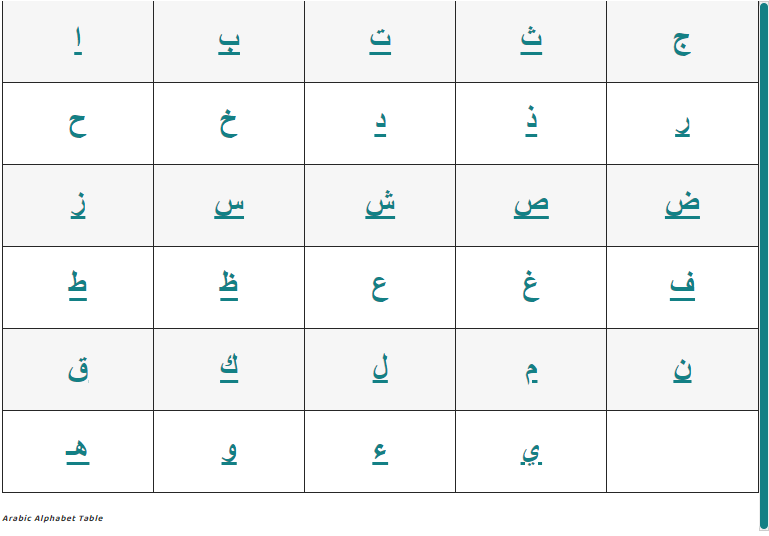
The first step is to get comfortable with the Arabic alphabet. This is the foundation of everything in Tajweed. Familiarize yourself with the Arabic alphabet, its unique letters (like ح, خ, غ), and their sounds. Here’s how you can do it:
Start with Basics: Learn to recognize each letter and its corresponding sound. There are 28 letters in the Arabic alphabet.
Pronunciation Practice: Pay special attention to pronunciation. Each letter has a unique sound, and getting this right is crucial for Tajweed. Focus on pronouncing each letter accurately, paying close attention to details like:
- Fatha: The short vowel sound “a” (like the “a” in “cat”)
- Kasra: The short vowel sound “i” (like the “i” in “hit”)
- Damma: The short vowel sound “u” (like the “oo” in “book”)
- Sukun: The absence of a vowel sound, which can create a “stopping” sound
- Shaddah: The doubling of a consonant, making it longer and stronger
- Tashkeel: The vowel and pronunciation marks above or below the letters
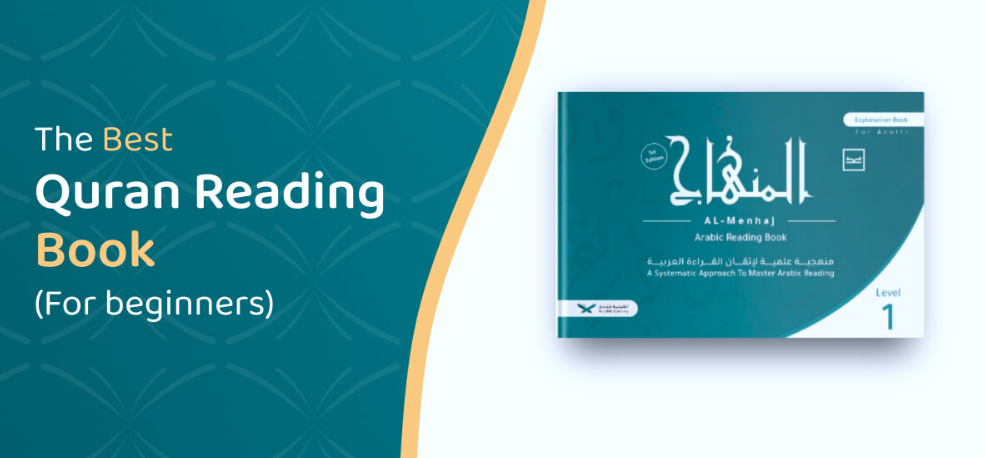
For students who still need to establish fundamental Arabic reading skills before beginning Tajweed, Learn Quran Tajweed Academy offers Al-Menhaj Book (Learn to Read Quran) which covers the alphabet and basic mechanics.
Explore Al-Menhaj Book (Learn to Read Quran)
Step 2: Understand Makhraj (Points of Articulation)
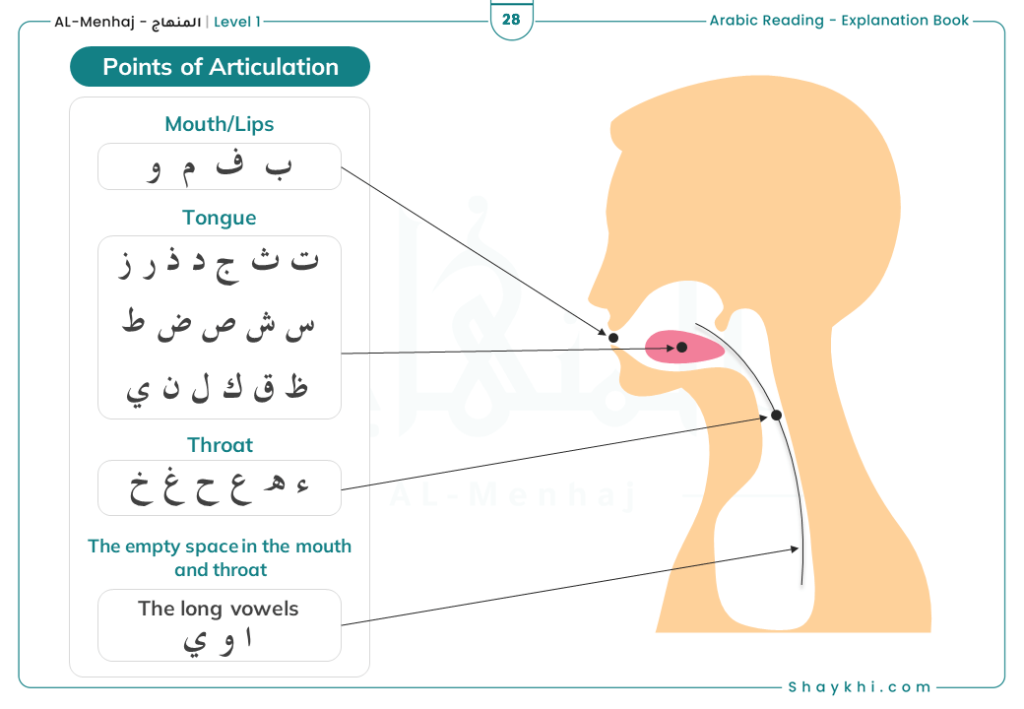
Makhraj refers to the specific place in the mouth or throat from where each letter should be pronounced. Each Arabic letter has a specific point of articulation. Mastering these points ensures clarity and correctness in recitation:
- Throat Letters (Halqi): Letters like ‘ع’ and ‘ح’ which come from the throat.
- Tongue Letters (Lisani): Such as ‘ت’, ‘د’, and ‘ذ’, which involve different parts of the tongue.
- Lip Letters (Shafawi): Including ‘ب’, ‘م’, and ‘و’, which use the lips.
Here’s how to master it:
- Visual Aids: Use diagrams of the mouth and throat to understand where each letter originates.
- Practice with a Teacher: A teacher can give you feedback and correct your pronunciation.
- Record Yourself: Record your pronunciation and compare it with authentic recitations to identify areas of improvement.
At Learn Quran Tajweed Academy, our Beginner Tajweed Course with Ijazah-certified instructors helps students master these points through personalized 1-on-1 sessions focused on correct articulation and foundational reading skills.
Begin your Tajweed journey with a free lesson

Step 3: Learn Sifaat (Characteristics of Letters)
Each Arabic letter has certain characteristics, known as Sifaat, which affect how it should be pronounced. These include qualities like heaviness, softness, and more. Here’s what you can do:
- List and Learn: Make a list of the main characteristics and which letters they apply to.
- Practice with Examples: Use words from the Quran to practice letters with different characteristics.
- Seek Feedback: Get feedback from a knowledgeable person or a teacher to ensure you’re applying the characteristics correctly.
Step 4: Study The Rules of Noon Sakinah And Tanween
The four rules of Noon Sakinah—Izhaar, Idgham, Iqlab, and Ikhfa—dictate how the silent “N” sound interacts with subsequent letters to create specific nasal sounds or clear, distinct articulations during your recitation.
1. Applying Izhaar Halqi clearly
Izhaar means to make a sound clear and distinct, occurring when a Noon Sakinah or Tanween is followed by any of the six throat letters like Hamzah or Ha.
In this case, the reciter must pronounce the “N” sound clearly from its articulation point without any extra nasalization or pausing, ensuring the flow of the verse remains smooth and linguistically correct.
2. Practicing Idgham with and without Ghunnah
Idgham involves merging the Noon Sakinah into the following letter, which happens when one of the six letters of the word Yarmaloon appears immediately after the silent “N” or the Tanween.
Reciters must distinguish between Idgham bi Ghunnah, which requires a two-beat nasal sound, and Idgham bila Ghunnah, where the letters Lam and Ra are merged completely without any nasal vibration.
3. Understanding the conversion in Iqlab
Iqlab occurs when a Noon Sakinah or Tanween is followed by the letter Ba, requiring the reciter to change the “N” sound into a hidden “M” sound with a slight nasalization.
This rule demands precision in lip contact, as the lips should not be pressed together too tightly, allowing the nasal sound to resonate properly while maintaining the flow of the surrounding words.
4. Mastering the concealment of Ikhfa Haqiqi
Ikhfa means to hide the sound of the Noon, occurring when it is followed by any of the remaining fifteen Arabic letters that are not associated with Izhaar, Idgham, or Iqlab.
The sound is produced by placing the tongue near the articulation point of the next letter while emitting a nasal sound from the nose, creating a beautiful transition between the two distinct sounds.
| Rule Category | Trigger Letters | Timing (Beats) | Sound Effect |
| Izhaar | Throat Letters | 1 Beat | Clear/Sharp |
| Idgham | ي ، ر ، م ، ل ، و ، ن | 2 Beats (mostly) | Merged/Fluent |
| Iqlab | ب | 2 Beats | N to M Shift |
| Ikhfa | Remaining 15 Letters | 2 Beats | Hidden/Nasal |
Learn Quran Tajweed Academy’s Intermediate Tajweed Course offers systematic progression for students who have mastered basic rules, ensuring they understand these complex attributes before advancing toward a professional level of Quranic certification.
Join our Intermediate Tajweed Course and get a free trial
Perfect Your Quran Recitation Today
Join expert-led Tajweed classes, and recite the Quran with confidence and clarity.
Start Your Free TrialStep 5: Applying The Various Types Of Madd And Elongation
Madd rules govern the lengthening of vowels from two to six beats, depending on whether they are followed by a Hamzah or a Sukun, creating the balanced flow characteristic of authentic Tarteel.
1. Mastering Madd Muttasil and Munfasil
Madd Muttasil occurs when a vowel and a Hamzah are in the same word, requiring a mandatory four or five-beat elongation to maintain the linguistic integrity of the divine Arabic text.
Madd Munfasil happens when the vowel ends one word and the Hamzah begins the next, allowing the reciter more flexibility in timing while still demanding consistency throughout the entire session of recitation.
جَاءَ نَصْرُ اللَّهِ
Jaa’a nasrullah
“The victory of Allah has come.” (An-Nasr 110:1)
(Demonstrates Madd Muttasil: 4-5 Beats on word Jaa’a)
2. Calculating the timing for Madd Lazim
Madd Lazim is the longest type of elongation, requiring a full six beats when a long vowel is followed by a permanent Sukun or a doubled letter within the same word or phrase.
This rule is frequently found in the opening letters of certain chapters and requires strong breath control to ensure the sound remains steady and clear for the entire duration of the six beats.
Learn Quran Tajweed Academy’s Quran Tarteel Course specializes in developing proper pacing, breath control, and melodious recitation that reflects the true beauty of these rules through consistent practice and expert correction of timings.
Join our Quran Tarteel Course and get a free trial

Step 6: Practicing Under The Supervision Of Ijazah Certified Teachers
Direct feedback from a qualified mentor is indispensable because Tajweed is an oral tradition that cannot be mastered through books alone, requiring real-time correction of subtle mistakes in pitch, timing, and tongue placement.
Our Tajweed Ijazah Program at Learn Quran Tajweed Academy provides structured, rigorous training under qualified Ijazah-holding scholars for students committed to achieving the highest levels of accuracy and obtaining an authentic chain of transmission.
1. Utilizing 1-on-1 recitation sessions
Individual sessions allow the teacher to focus exclusively on your unique vocal challenges, identifying specific letters or rules where you may be struggling and providing tailored exercises to overcome those specific hurdles quickly.
At Learn Quran Tajweed Academy, these sessions are available 24/7, providing global students with the flexibility to learn from their homes while maintaining a consistent schedule of improvement under the watchful eye of experts.
2. Recording and reviewing your recitation
Recording yourself during practice sessions helps you identify discrepancies between your recitation and that of expert Qaris, allowing you to refine your ear and develop a deeper sensitivity to the nuances of Tajweed.
Your instructor can then review these recordings or listen to you live, offering corrections that ensure you are not unknowingly repeating mistakes that could eventually become difficult habits to break during your learning journey.
Read Also: Tajweed Symbols and Stop Signs
Step 7: Achieving Consistency Through Daily Recitation Exercises
Regular practice builds muscle memory in the tongue and throat, allowing the complex rules of Tajweed to become second nature and eventually leading you toward the goal of a professional and moving recitation.
Consistency is the key to moving from the mechanical application of rules to a state where your heart and voice are in harmony, reflecting the true spirit of the Holy Quran with every breath.
1. Setting a daily practice schedule
Dedicate at least fifteen to thirty minutes every day to practicing a specific set of verses, focusing on one rule category at a time until you feel confident in your ability to apply it perfectly.
By rotating your focus between Makharij, Sifat, and Madd, you ensure a well-rounded development of your skills, preventing any single aspect of Tajweed from falling behind as you advance through more complex Quranic sections.
Read Also: Is Tajweed Obligatory In Salah?
2. Listening to expert Qaris regularly
Listening to world-renowned reciters who possess authentic Ijazah helps you internalize the correct rhythm and melody of the Quran, providing a mental template for how the rules should sound when applied in a real context.
Try to mimic their pace and the way they transition between different sounds, as this auditory training is just as important as the physical practice of moving your tongue and controlling your breath during recitation.
Read Also: Do I have to learn Tajweed?
Perfect Your Quran Recitation Today
Join expert-led Tajweed classes, and recite the Quran with confidence and clarity.
Start Your Free TrialRead Also: How Long Does It Take to Learn Tajweed?
Step 8: Delve into complex Tajweed principles (optional)
Once you’ve mastered the basics, you can move on to more advanced Tajweed rules, such as:
- Rules of Stopping and Starting (Waqf and Ibtida): These rules help you determine where to pause and how to resume recitation correctly, maintaining the meaning and flow of the text.
- Specifics of Hafs An Asim Narration: Since the Hafs an Asim narration is the most commonly recited version, understanding its unique aspects will enhance your proficiency.
By following these steps, you’ll be well on your way to mastering Tajweed. The key is consistent practice and seeking guidance from knowledgeable sources. May Allah bless your blessed endeavor!
Read Also: How to Learn Quran with Tajweed at Home?
Step 9: Learn Tajweed from Both Theoretical and Practical Perspectives
To master Tajweed, it’s essential to balance theoretical knowledge with practical application. Here’s how you can integrate both aspects into your learning journey:
First: Theoretical Perspective
- Study Tajweed Rules: Invest time in understanding the theoretical rules of Tajweed. Use textbooks, online courses, and scholarly articles to deepen your knowledge.
- Learn Arabic Grammar: A good grasp of Arabic grammar can significantly aid in understanding Tajweed rules. It helps you know the origins and proper usage of different letters and sounds.
- Memorize Key Concepts: Make flashcards or notes of important Tajweed rules and concepts. Regular review of these notes can reinforce your learning.
Read Also: Is Tajweed Obligatory?
Second: Practical Perspective
- Engage in Active Recitation: Apply the theoretical knowledge during your recitation sessions. Focus on the correct pronunciation and the rules you’ve learned.
- Interactive Tajweed Tools: Use apps that provide instant feedback on your recitation. These tools can highlight mistakes and suggest corrections.
- Participate in Recitation Competitions: Many communities and online platforms host Quran recitation competitions. Participating in these can boost your confidence and allow you to practice Tajweed in a structured environment.
Balancing Theoretical and Practical Learning
| Theoretical Learning | Practical Application |
| Studying Tajweed rules and terminology from textbooks and resources. | Reciting the Quran with Tajweed under the guidance of a qualified teacher. |
| Understanding the phonetics and articulation of Arabic letters. | Practicing the correct pronunciation of letters and words. |
| Analyzing the different types of Tajweed rules and their application. | Applying the Tajweed rules during recitation of the Quran. |
| Memorizing common Tajweed examples and their variations. | Identifying and applying Tajweed rules in different Quranic verses. |
Perfect Your Quran Recitation Today
Join expert-led Tajweed classes, and recite the Quran with confidence and clarity.
Start Your Free TrialRead Also: Tajweed – Meaning, Types, History, and More
Master Quran Tajweed with Learn Quran Tajweed Academy
Mastering how to learn quran with tajweed requires a systematic approach, combining theoretical knowledge with the practical, real-time feedback that only an Ijazah-certified Qari can provide to ensure your recitation reaches perfection.
Learn Quran Tajweed Academy offers:
- Ijazah-certified Qaris with authentic chains of transmission (sanad).
- Personalized 1-on-1 instruction tailored to your specific recitation challenges.
- Structured progression from Beginner Tajweed Course to the Tajweed Ijazah Program.
- Flexible 24/7 scheduling to accommodate students from all time zones.
- Interactive feedback and a proven methodology for non-Arabic speakers.
Check out the best tajweed course for your needs:
- Practical Tajweed Course
- Beginner Tajweed Course
- Intermediate Tajweed Course
- Advanced Tajweed Course
- Quran Tarteel Course
- Tajweed Ijazah Program
- Tajweed Course for Sisters
- Tajweed course for Kids
Book your free trial Tajweed lesson today to assess your current application of Tajweed rules and receive a customized learning path toward recitation mastery.

Conclusion
Beautiful Quran recitation grows from strong foundations: accurate letter recognition, precise articulation, and awareness of each sound’s unique qualities. These elements ensure clarity, protect meaning, and create a recitation that reflects the linguistic integrity of the Quranic text.
Advanced Tajweed rules refine this foundation by shaping rhythm, elongation, and sound transitions. When applied correctly, rules like Ikhfa, Idgham, and Madd establish balance and flow, allowing recitation to sound natural, measured, and faithful to authentic transmission.
True mastery emerges through consistency and supervision. Regular practice, attentive listening to expert reciters, and real-time correction from qualified teachers transform theory into instinct, guiding the reciter toward confident, accurate, and spiritually resonant Quranic recitation.
Related Articles
Tajweed Basics



Leave a Reply