 Tajweed Basics

Every letter in the Quran carries a precise instruction—and sukoon is one of the most powerful. This small diacritical mark tells the reciter to stop vowel movement entirely, creating the rhythmic stillness that defines measured, beautiful Quranic recitation.
Sukoon governs how Arabic syllables close, how sounds are held or merged, and how the stops and glides of tarteel take shape. Mastering it separates functional reading from truly polished recitation—and this guide covers every dimension of it.
What Is Sukoon in Arabic?
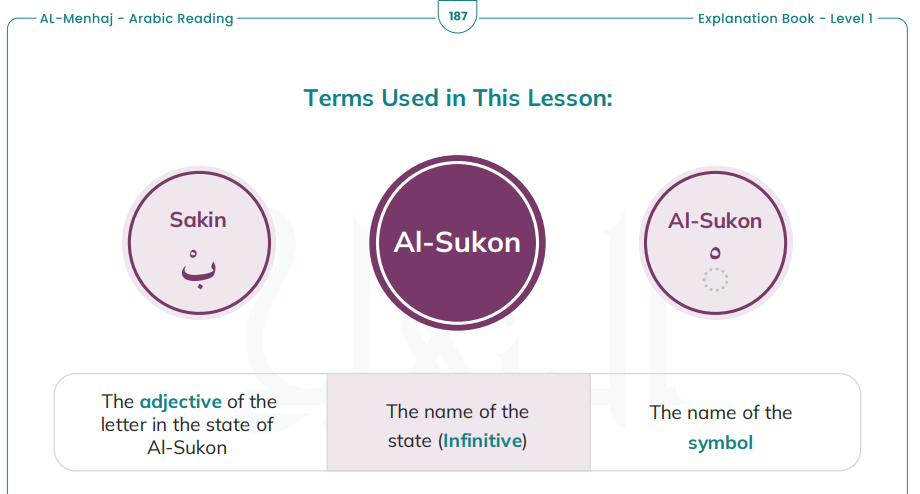
Sukoon (سُكُون) linguistically means “stillness” or “rest.” In Arabic grammar and Tajweed, sukoon refers to the state of a letter that carries no vowel—no fathah, kasrah, or dammah—and is therefore pronounced without any following vowel sound. The letter is spoken and immediately “rests.”
A critical error many non-Arabic speakers make is inserting a short “uh” sound after a saakin letter—for example, pronouncing بَلْ as “bal-uh” instead of a clean “bal.” This distorts meaning and constitutes a violation of Tajweed accuracy.
What Is the Symbol of Sukoon?
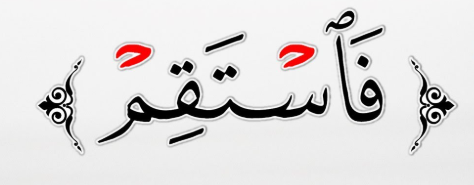
The sukoon symbol in Arabic is a small hollow circle (°) placed above a letter in Arabic script.
Explore Al-Menhaj Book (Learn to Read Quran)
Sukoon Symbol in Quran
The sukoon symbol in Quran editions may vary slightly in style across different printing houses—some appear more oval or slightly elongated—but the rule it conveys is identical in every standard mushaf.
When you see this symbol, the instruction is clear: pronounce the letter without extending it into a vowel sound.
What Is an Example of a Sukoon in Arabic Words?
Sukoon in Arabic words is equally prominent. Common examples Sukoon in Arabic words include:
| Arabic Word | Transliteration | Saakin Letter | Position |
| بَيْت | Bayt (house) | ي | Middle |
| كَلْب | Kalb (dog) | ل | Middle |
| قَلْب | Qalb (heart) | ل | Middle |
| بَاب + waqf | Bāb (door) | ب | End (at stop) |
Every time you stop at the end of an Arabic word in speech or recitation (waqf), the final letter automatically takes sukoon—even if it carried a vowel during continuous recitation. This is why waqf rules are deeply intertwined with sukoon rules.
Read also: Tanween in Tajweed: A Complete Guide to Types, Rules, and Recitation Application
How to Pronounce Sukoon in Arabic Correctly?
How to pronounce sukoon in Arabic is one of the most practical questions beginners ask—and the answer requires attention to three physical elements:
1. Clean Closure Without Vowel Leakage
The saakin letter must be articulated fully at its makhraj (articulation point) and stopped there. No trailing vowel. For throat letters like hamzah saakinah (أْ), this means a complete glottal stop. For lip letters like meem saakinah, a firm lip closure is required.
2. Avoidance of Artificial Elongation
Non-Arabic speakers sometimes “stretch” a saakin letter, especially at the end of words. The letter لْ in قُلْ must be clean and brief—not “qull” with a doubled sound or “qul-uh” with a vowel insertion after it.
Perfect Your Quran Recitation Today
Join expert-led Tajweed classes, and recite the Quran with confidence and clarity.
Start Your Free TrialWhat Is the Meaning of Sukoon in Tajweed?
In Tajweed specifically, the sukoon meaning in Quran extends beyond mere “vowellessness.” It signals a structural and recitation-level instruction. A saakin letter (letter with sukoon) functions as the closing consonant of a syllable, which directly affects how you apply rules such as:
- Noon Saakinah and Tanween rules (Idgham, Ikhfa, Iqlab, Izhar)
- Meem Saakinah rules (Idgham Shafawi, Ikhfa Shafawi, Izhar Shafawi)
- Qalqalah letters (echoing bounce when saakin or at waqf)
- Madd letters emerging from saakin alif, waaw, and yaa
So in Tajweed, sukoon meaning is not a passive mark—it is an active trigger for multiple recitation rules that govern fluency, accuracy, and beauty of recitation.
At Learn Quran Tajweed Academy, our Beginner Tajweed Course systematically introduces sukoon alongside the harakaat so students build correct syllable awareness from the very first lesson—with Ijazah-certified Qaris guiding each session.
Begin your Tajweed journey with a free lesson

Sukoon Letters and Their Articulation in Tajweed
Any Arabic letter can carry sukoon. However, Tajweed gives special significance to certain saakin letters because of the rules they trigger. The three categories most central to sukoon-based rules are:
1. The Noon Saakinah and Its Four Rules
When noon (ن) carries sukoon and is followed by specific letters, four distinct Tajweed rules apply. Scholars further divide Idgham into two types—with ghunnah (nasal sound) for the letters يَنْمُو (yaa, noon, meem, waaw), and without ghunnah for laam and raa.
| Rule | Trigger Letters | Application |
| Izhar Halqi | ء ه ع ح غ خ | Clear pronunciation, no merging |
| Idgham bi Ghunnah | ي ن م و | Noon merges with nasal sound held for two counts |
| Idgham bila Ghunnah | ل ر | Noon merges completely, no nasal sound |
| Iqlab | ب | Noon converts to meem sound with ghunnah |
| Ikhfa | 15 remaining letters | Nasal concealment between clarity and merging |
2. The Meem Saakinah Rules
When meem (م) carries sukoon, three rules govern recitation based on the following letter. Idgham Shafawi merges with a following meem; Ikhfa Shafawi conceals before baa with a subtle nasal; Izhar Shafawi applies clearly before all other letters.
3. Qalqalah Letters When Saakin
The five qalqalah letters—ق ط ب ج د (remembered by the phrase قُطْبُ جَدّ)—produce a distinct echoing bounce when they carry sukoon mid-word (Qalqalah Sughra), and a stronger bounce at waqf (Qalqalah Kubra). This controlled echo is a required element of proper Tajweed, not an optional embellishment.
Read also: The Rules of Raa in Tajweed
Examples of Sukoon in the Quran
The Quran is filled with sukoon examples, and studying them in context accelerates mastery. Here are carefully verified examples demonstrating different applications:
1. Noon Saakinah with Idgham bi Ghunnah
One of the most frequently cited examples of sukoon in the Quran involves the noon saakinah of فَمَن before the yaa of يَعْمَلْ in Surah Az-Zalzalah:
فَمَن يَعْمَلْ مِثْقَالَ ذَرَّةٍ خَيْرًا يَرَهُ
Famaya’mal mithqāla dharratin khayran yarah
“So whoever does an atom’s weight of good will see it.” (Az-Zalzalah 99:7)
Noon saakinah in “faman” merges into the following yaa — Idgham bi Ghunnah, nasal sound held for two counts
2. Qalqalah Saakin Mid-Word
يَجْعَلُونَ أَصَابِعَهُمْ فِي آذَانِهِم
Yaj’alūna asābi’ahum fī ādhānihim
“They put their fingers in their ears.” (Al-Baqarah 2:19)
The jeem carries sukoon mid-word in “yaj’alūna,” requiring Qalqalah Sughra bounce
3. Meem Saakinah with Ikhfa Shafawi
وَهُم بِالْآخِرَةِ هُمْ يُوقِنُونَ
Wa hum bil-ākhirati hum yūqinūn
“And of the Hereafter they are certain in faith.” (An-Naml 27:3)
Meem saakinah in “hum” before baa — Ikhfa Shafawi applies with subtle nasal concealment
Working with an Ijazah-certified instructor at Learn Quran Tajweed Academy through our Practical Tajweed Course provides the individualized correction needed to internalize these context-based pronunciations, with flexible scheduling available 24/7.
Join our Practical Tajweed Course and get a free trial

Importance of Sukoon in Understanding Arabic
The importance of sukoon in understanding Arabic cannot be overstated for both language learners and Quran reciters. In Arabic morphology, sukoon determines word structure and grammatical weight.
A single misplaced or omitted sukoon changes a word’s grammatical form entirely. The verb كَتَبَ (kataba, “he wrote”) functions differently from a truncated jussive form precisely because of how sukoon operates at the syllable boundary.
In Quranic Arabic, where every diacritical mark is divinely preserved, sukoon carries legal and theological significance.
Tajweed scholars classify errors that alter meaning as lahn jali (manifest error)—an impermissible mistake in obligatory recitation. Mistakenly vocalizing a saakin letter often falls into this category, making the importance of sukoon in understanding Arabic directly connected to the validity of one’s recitation.
Grammatical Role of Sukoon in the Arabic Language
The grammatical role of sukoon in the Arabic language is formally recognized in Arabic linguistics (‘ilm an-nahw and sarf). Sukoon serves as a sign of grammatical state (i’rab) for certain verb conjugations:
| Grammatical Context | Role of Sukoon |
| Jussive (Majzum) verbs | Sukoon on final letter marks jussive state |
| Imperative (Amr) verbs | Many imperatives end with sukoon |
| Waqf (stopping) | All final letters take sukoon when stopping |
Understanding these grammatical functions helps Quran students recognize why a saakin mark appears where it does—which deepens both comprehension and correct recitation simultaneously.
The Difference Between Sukoon and Jazm
The difference between sukoon and jazm is a point of genuine scholarly nuance worth clarifying carefully. In Arabic grammatical tradition:
Sukoon is a phonological state—the absence of a vowel on any letter in any context, whether mid-word or at waqf.
Jazm (جَزْم) is a grammatical state—the sign of the jussive mood in verbs. The visible sign of jazm is sukoon appearing on the final letter of a jussive verb.
So jazm and sukoon are related but not synonymous. Sukoon describes the diacritical mark itself; jazm describes the grammatical reason the mark is present on a particular verb form.
In Quranic recitation, recognizing jazm helps you understand why sukoon is present on a verb ending—rather than simply noting the mark without grammatical context.
Sukoon in Practice During Quranic Recitation
Sukoon in practice requires active application across several connected Tajweed areas. The following summarizes where sukoon directly governs your recitation decisions:
1. Sukoon at Waqf
Stopping on any word automatically sukoons its final letter. The rules governing how different letters sound at waqf—particularly qalqalah letters, haa of femininity, and lengthened vowels—are all sukoon-dependent.
The reciter must know which letters produce qalqalah at waqf and which require other accommodations.
2. Sukoon and Shaddah Interaction
A shaddah (ّ) represents a doubled letter—the first instance of the letter is saakin, the second carries a vowel.
The saakin first portion is what “receives” the idgham that creates the shaddah. Recognizing this helps students understand shaddah as a visible product of sukoon interaction between two letters.
Learn Quran Tajweed Academy’s Quran Tarteel Course specializes in developing the proper pacing and breath control needed to honor each sukoon correctly within measured recitation—ensuring your tarteel reflects true Quranic rhythm.
Join our Quran Tarteel Course and get a free trial

Sukoon and Arabic Calligraphy
Sukoon and Arabic calligraphy share a visible relationship that is often underappreciated. In classic Arabic calligraphy traditions—Naskh, Thuluth, Nastaliq—the sukoon symbol is rendered with careful aesthetic consideration as part of the full diacritical system.
In the standard Uthmani mushaf, the sukoon symbol appears as a small hollow circle (جَوْفَاء) above the saakin letter. Calligraphers ensure the mark is correctly proportioned—distinctive enough to identify at a glance but balanced against the letter it crowns.
For students learning from printed mushafs, recognizing the sukoon symbol quickly and accurately is a calligraphic literacy skill. Misreading a sukoon as a small waaw or an incomplete dammah is a common early error. Training your eye alongside your tongue is therefore part of complete Tajweed mastery.
How to Learn Sukoon Systematically?
How to learn sukoon follows a clear progression that every serious Tajweed student should map out from the start:
Stage 1 — Symbol recognition: Learn to visually identify the sukoon symbol reliably in any mushaf font or print style.
Stage 2 — Isolated pronunciation: Practice pronouncing each Arabic letter with sukoon cleanly, focusing on its makhraj without any trailing vowel.
Stage 3 — Connected words: Apply sukoon in syllables within actual Arabic words, ensuring no vowel insertion between syllables.
Stage 4 — Tajweed rules integration: Learn each sukoon-triggered rule (noon saakinah, meem saakinah, qalqalah, madd) as a connected system, not in isolation.
Stage 5 — Quranic application: Recite full verses with attention to every saakin letter, receiving feedback from a qualified instructor.
For students who still need to establish fundamental Arabic reading skills before beginning Tajweed study, Learn Quran Tajweed Academy offers Al-Menhaj Book (Learn to Read Quran)—a comprehensive foundational resource covering the Arabic alphabet, letter forms, and basic reading mechanics, prepared by our expert teaching team.
Perfect Your Quran Recitation Today
Join expert-led Tajweed classes, and recite the Quran with confidence and clarity.
Start Your Free TrialBegin Your Sukoon Mastery with Learn Quran Tajweed Academy
Sukoon is foundational to correct Quranic recitation—and mastering it properly requires qualified, personalized instruction.
Why students choose Learn Quran Tajweed Academy:
- Ijazah-certified instructors specializing in non-Arabic speakers
- Structured courses from Beginner Tajweed Course through Tajweed Ijazah Program
- 1-on-1 personalized sessions with flexible 24/7 scheduling
- Systematic rule progression — sukoon, madd, qalqalah, and beyond
- Free trial lesson — no commitment required
Check out the best tajweed course for your needs:
- Practical Tajweed Course
- Beginner Tajweed Course
- Intermediate Tajweed Course
- Advanced Tajweed Course
- Quran Tarteel Course
- Tajweed Ijazah Program
- Tajweed Course for Sisters
- Tajweed course for Kids
Book your free trial Tajweed lesson today to assess your current application of Tajweed rules and receive a customized learning path toward recitation mastery.

Conclusion
Sukoon is not merely an absence of vowel—it is an active, rule-governing presence in Quranic Tajweed. Every makhraj closure, every idgham trigger, every madd elongation traces back to a saakin letter performing its precise function.
Grasping the grammatical role of sukoon in the Arabic language and recognizing the difference between sukoon and jazm deepens your recitation far beyond surface reading. It connects you to the linguistic precision Allah placed into every letter of His Book.
Insha’Allah, with consistent practice, qualified instruction, and attentive study of examples of sukoon in the Quran, your recitation will reflect the stillness and beauty this blessed mark is named after.
Related Articles
Tajweed Basics


Leave a Reply